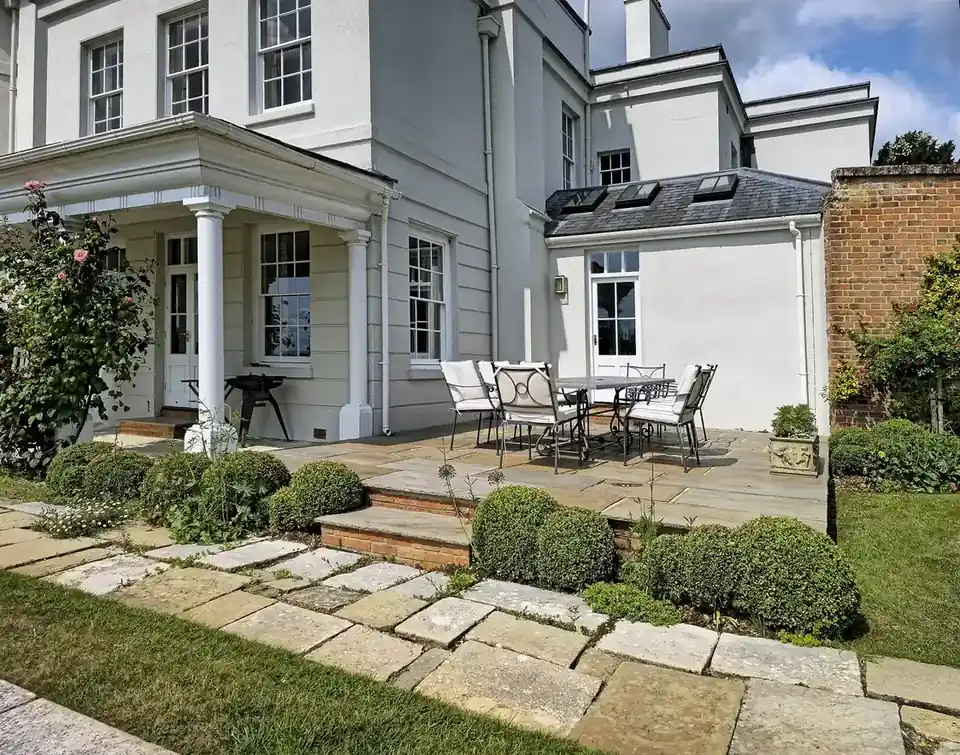
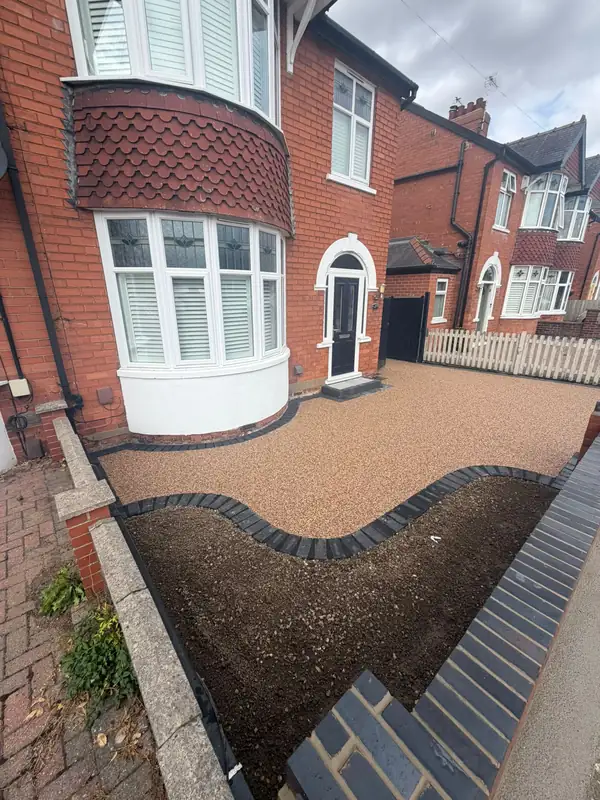
Ask what they put under the slabs and how deep. A firm that answers with a single number before they have seen your garden is guessing. In Romford the honest answer is that it depends on the ground, and the only way to know is to dig. We would rather spend twenty minutes with a spade on the first visit than come back in eighteen months to lift a terrace that has dropped on the clay side of town.
Watch how they handle the fall. Water has to run away from the house, at least 1 in 80, and it has to end up somewhere sensible. On the older terraces near the station the back yard is often boxed in by walls, so there may be nowhere for it to go without a channel drain. Anyone who promises a dead-level patio up against your back door is setting you up for a damp wall and a puddle on the step.
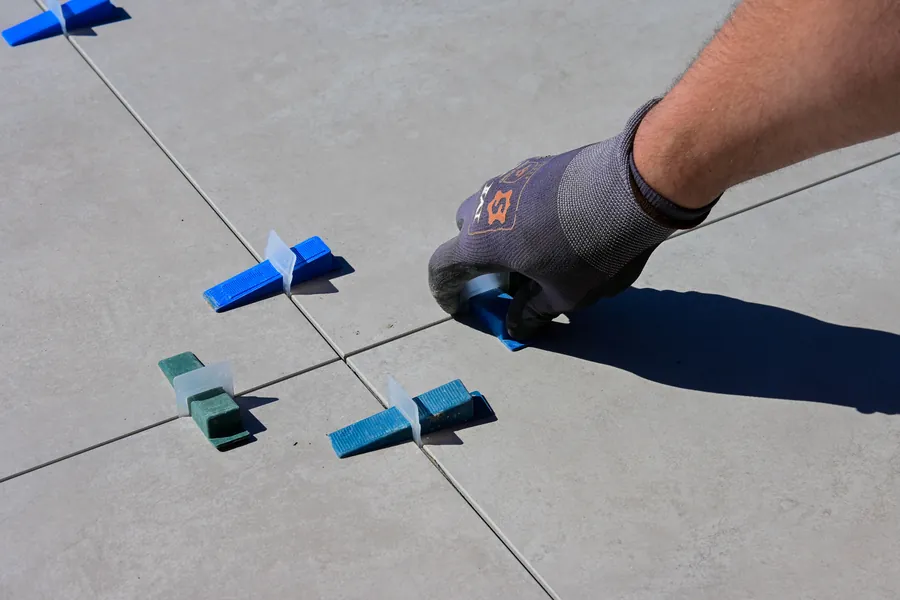
Then look at the pointing and the bed. Slabs on five dabs of mortar sound hollow when you tap them, and they crack. Sand and cement pointing looks fine on the day and starts to break up within a couple of winters. Ask for a full bed and a resin jointing compound by name. If the price is much lower than everyone else's, one of those two is usually where the saving has been made.