01
Rainham Hall
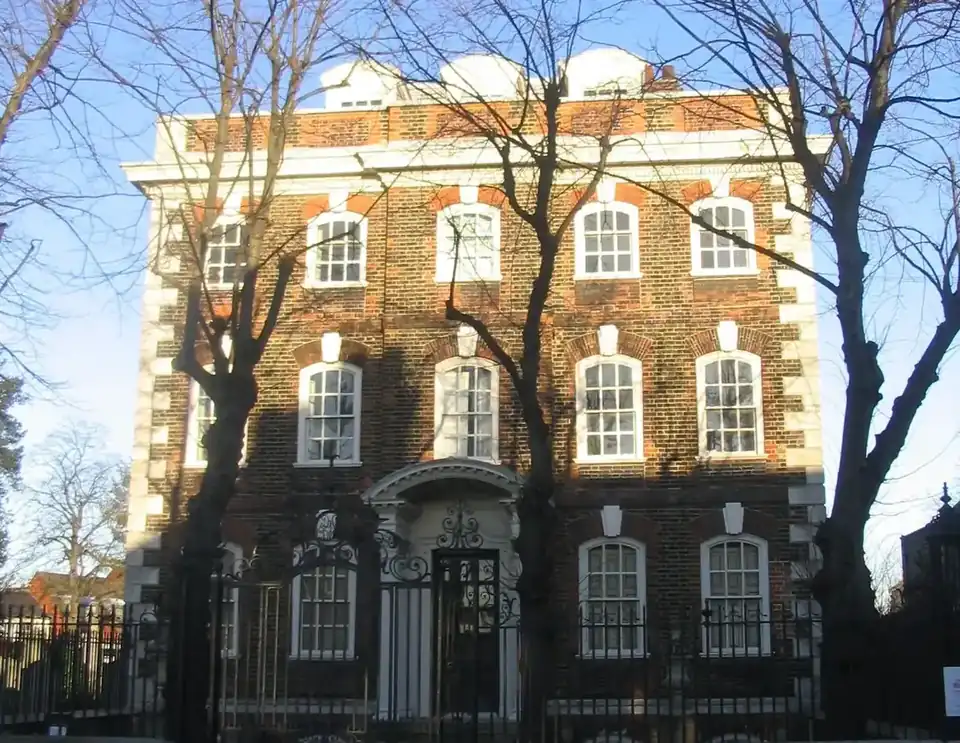
A 1737 merchant's house on the Broadway, two minutes from the station and run by the National Trust. A well-preserved reminder of the money that river trade once brought here.
Learn more about Rainham Hall on Google MapsUpminster, RM14 - covering Hornchurch, Romford and the whole of Havering
If you want patios in Rainham done properly, the first question is not which slab you like. It is which Rainham you live in. The old village around the Broadway and the roads running up Upminster Road South sit on gravel that drains freely, so a terrace there goes down on a normal base and stays put. Drop towards New Road and the marshes and the ground turns to soft alluvium only a few feet above the Thames, and it holds water after a wet week. We come down from Corbets Tey Road, walk the garden, dig a test hole if we need one and tell you which build your patio needs before we price anything.
We reply the same working day, usually within the hour.
Rainham village is a few minutes down Upminster Road from our base at Corbets Tey. Jim and his family have been in driveways and patios for 35 years and like to keep their work this close.
Rainham ground changes from gravel by the village to marsh near the Thames, and a patio needs building for whichever you have. We get most of our work through recommendation, and short trips keep our prices lean.
01
A garden off Lambs Lane South and a garden near the marsh need different depths of MOT Type 1 underneath. We set the base for the ground you actually have, so the slabs are not rocking by the second winter.
02
Every terrace is laid with a fall of at least 1 in 80 away from the back wall. On the low, wet ground we add a channel or a gravel strip at the far edge so the run-off has somewhere to go.
03
Lawns near the river can stay soggy from November to March. A paved area by the back door gives you somewhere dry to hang the washing, stand the bins or sit out when the grass is a bog.
04
Damp, shaded gardens grow algae on porous stone fast. We will tell you honestly where porcelain earns its higher price and where calibrated Indian sandstone will do the same job for less money.
05
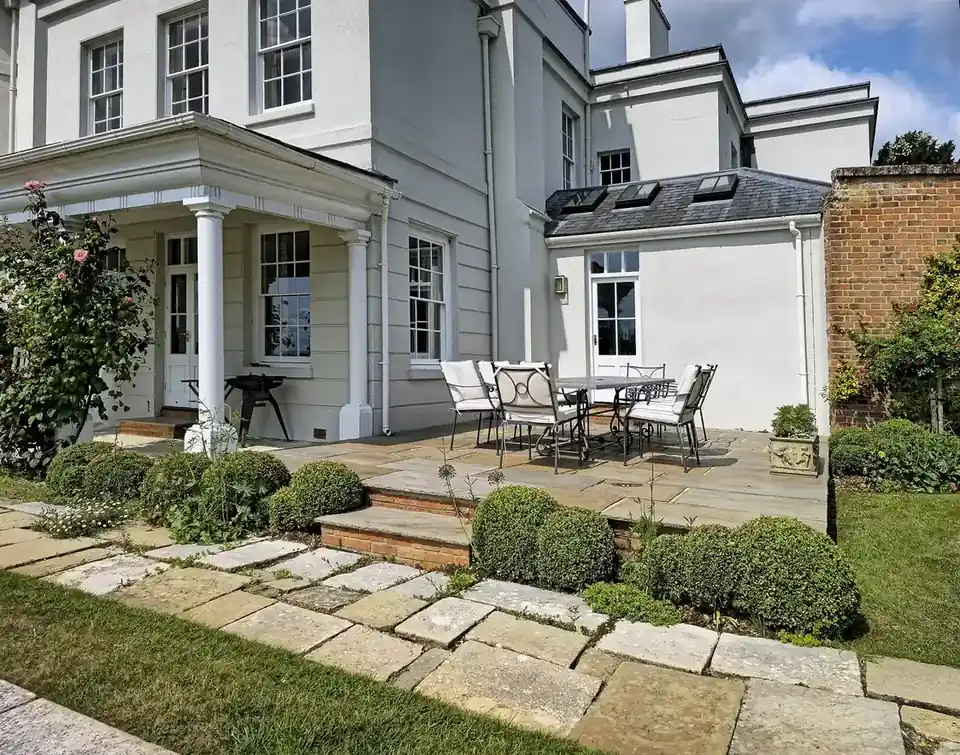
Inside the Rainham conservation area, near the church and Rainham Hall, we keep to stone colours and edging that sit quietly beside older brick, and we check with Havering first if a listed building is involved.
06
The same people who dig out your garden lay and point the slabs. Nobody hands the base to a stranger, and the person who quoted you is the person you ring if something is not right.
Local
Upminster Based
Hornchurch, Upminster and across Havering
6
Surface Types
Resin to gravel, one crew for all of it
Free
Site Visits & Quotes
Written, itemised and fixed
Written
Guarantee
Handed over on paper at the final walk-round
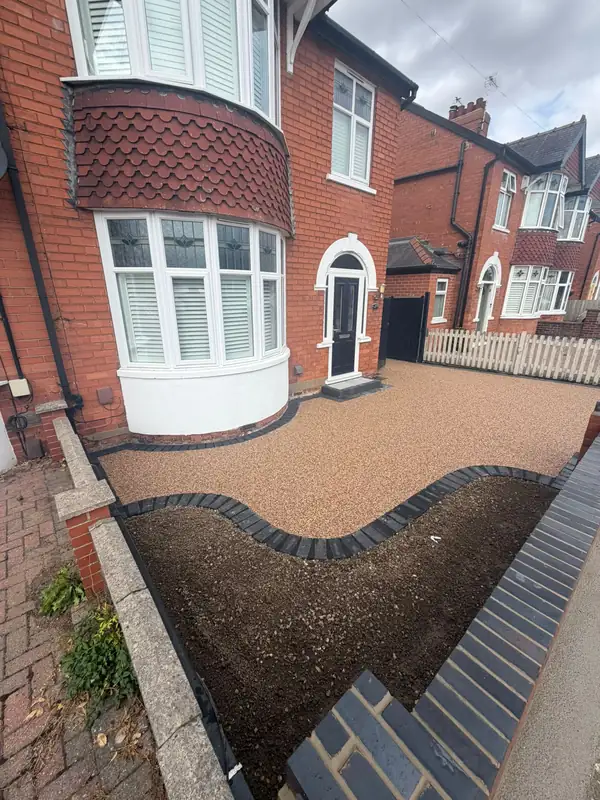
Most Rainham houses are post-war semis and terraces, with some older streets dating back to when the first roads were laid out in 1880. Back gardens are a fair size by London standards, so a patio here is often a proper terrace rather than a strip of slabs by the kitchen door. On the higher gravel streets the soil drains so quickly that the main risk is a lazy base, not standing water. If the drive out front has also seen better days, we can look at repairing a sunken or cracked drive in Rainham on the same visit and quote both together.
Nearer the Thames it is a different job. The land falls to around five feet above sea level, and in 1953 the tide came across this side of Rainham and South Hornchurch. Alluvial clay and silt down there will not take a soakaway, so a patio that relies on the ground to drain it ends up with puddles against the back door. We dig deeper, put geotextile under the base and lead the water to a channel or an existing surface drain. Havering Council will not want an application for most rear patios, but the build still has to suit the site.
Planning authority: Havering Council
Seven stages, and the first one decides how the rest go. On a Rainham job that usually means finding out what is under the lawn before anyone picks a slab.
We measure the garden, find the height of the damp-proof course and take levels from the back door to the far boundary. If we suspect marsh ground, a spade test shows us what the base will sit on.
You get a drawing of the terrace with slab sizes, steps and edging marked, and a written price for the job rather than a vague day rate. Change your mind on the stone before we start and we re-price it that week.
We strip turf and topsoil down to firm ground and take the spoil away. On the soft low ground near the river we keep going until the spade stops sinking, which is often deeper than people expect.
Between 100 and 150 mm of MOT Type 1 goes in, compacted in two separate layers with a plate compactor. Where the ground is wet clay or silt, a geotextile membrane goes down first to stop the stone pushing into it.
Edge restraints are set so the outer slabs cannot creep. The whole terrace runs at 1 in 80 or steeper away from the house, and on lower Rainham plots we fit a channel or a gravel strip along the far edge.
Slabs go down on a full mortar bed, never on five dots, and porcelain gets a priming slurry on the back so it bonds. Each one is tapped down and checked with a level against its neighbours.
Joints are filled with a two-part resin compound that keeps weeds out and lets water through. You can walk on it the next day. We go round the job with you and ask you to keep furniture off for two or three days.
Not sure which surface suits the house? The cost guide compares all six side by side, and the site visit is free either way.
Most guarantees in this trade cover the surface, because the surface is the easy bit. Ours is written around the structure underneath, which is where a driveway on Havering's London clay either holds or does not. We put the excavation depth, the compacted MOT Type 1 thickness, the concrete haunch behind every edge and the drainage route on the quote, and we guarantee that build. If the surface sinks, spreads or ponds because any of that was not done right, we come back and fix it at our cost.
In
Writing, before we start
The guarantee terms go on the quote, not on a leaflet after the job
0
Overlays on a bad base
We will not lay a new surface over a base that has already failed, however cheap it would make the quote
Ask anyone quoting how deep they plan to dig, and listen for a number. A firm that says it will see on the day has not thought about your ground. In Rainham the answer should change depending on whether you are up near Upminster Road South or down by the marsh, and a good installer will explain why without being asked twice. If they quote the same depth for every garden in the borough, they are pricing a template, not your job.
Watch how they talk about water. The fall away from the house, where the run-off ends up and what the bottom of the garden looks like in February are the questions that separate a terrace that lasts from one that ponds. On low-lying plots near the Thames we would expect any installer to bring up a channel drain or a gravel strip without being prompted. Silence on drainage is the clearest warning sign we know of, and it is surprisingly common.
Then look at the slabs themselves. Cheap porcelain can be thin and badly calibrated, and uncalibrated sandstone varies so much in thickness that it is hard to lay flat. We use 20 mm porcelain and 22 mm calibrated Indian sandstone, and we would rather show you samples in your own garden light than in a showroom. Ask for the jointing product by name as well. A sand and cement joint on a wet Rainham patio will be growing moss within a year or so.
We lay all four regularly. The right pick depends mostly on how wet and shaded your garden is, and how much time you want to spend keeping it clean.
| Option | Porcelain | Indian sandstone | Limestone | Concrete slabs |
|---|---|---|---|---|
| Laid price per m² | £110 to £150 | £90 to £120 | £100 to £135 | £75 to £95 |
| On wet, marsh-side ground | Our first choice, it takes on almost no water | Fine on a good fall, better if sealed | Darkens and stays damp in shade | Soaks up water and greens over quickly |
| Algae build-up | Very little, and it wipes off | Moderate, wants an annual clean | Shows green in shady corners | Heavy unless washed often |
| Barbecue fat and red wine | Wipes clean | Can mark if left overnight | Marks easily | Stains sink in |
| Suits which houses | Newer builds and modern rear extensions | Post-war semis wanting a natural look | Older village houses near the church | Budget jobs, side passages, bin stores |
| Yearly upkeep | A sweep and a hose down | Brush clean, reseal every few years | Gentle cleaner, no harsh chemicals | Pressure wash, likely replaced sooner |
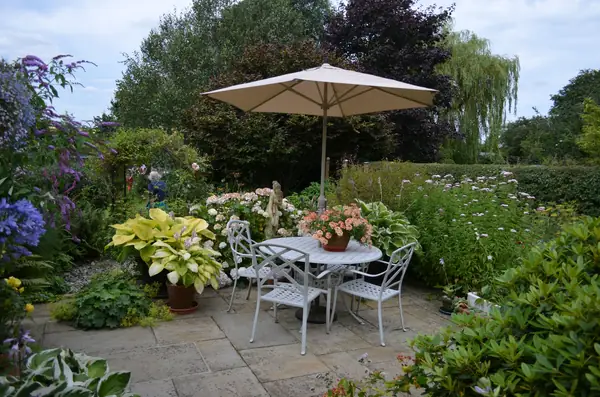
A big-format slab makes a modest garden look wider, but it needs a dead flat base, which is one more reason the dig matters on soft Rainham ground. Mixed-size sandstone in a random pattern hides small level differences and suits older houses well. Where the garden rises from the back door, a single step or a low retaining wall is far better than a ramp of paving that never quite drains. We sketch the options so you can compare them before deciding.
"On Rainham gardens nearer the river, most of the old patios we are asked to replace were laid with hardly any fall, and the slabs closest to the back door are the ones that have dropped."
Based on enquiries and jobs handled by Hornchurch & Upminster Driveways.
Our patios run from £90 to £150 per square metre laid, and that covers the dig, the base, the edges, the slabs and the jointing. A typical 25 m² terrace behind a Rainham semi comes to between £2,300 and £3,800 depending on the stone you choose. Bigger gardens of 40 to 60 m², or anything with steps and walls, cost more, and we price those from the drawing so there are no surprises.
Guide price from
£90/m²
Rainham prices are fixed in writing after a free site visit.
Get A Fixed QuoteA plain Rainham terrace takes three or four working days to lay, and if you would rather not watch us at it, these three are close by.
01
A 1737 merchant's house on the Broadway, two minutes from the station and run by the National Trust. A well-preserved reminder of the money that river trade once brought here.
Learn more about Rainham Hall on Google Maps02
411 hectares of ancient grazing marsh along the Thames with a visitor centre at the Purfleet end. Flat walking and a lot of birds, whatever the month.
Learn more about RSPB Rainham Marshes on Google Maps03
Up the Ingrebourne valley from Rainham, the former RAF Hornchurch airfield with Essex Wildlife Trust's visitor centre and the largest freshwater reed bed in London alongside.
Learn more about Hornchurch Country Park on Google MapsWe cover the whole of Rainham from our yard on Corbets Tey Road, from the village and Rainham Hall out to South Hornchurch, Wennington Road and the edge of the marshes.
For a patio in the back garden, almost certainly not. Rear patios are normally permitted development, so Havering Council does not need an application. The exceptions are a listed building, a flat or maisonette, or a design that raises the ground level a lot close to a boundary, where neighbours could end up overlooked. Paving a front garden is a different matter: since October 2008, more than five square metres of new hard surface out front needs permission unless it is permeable or drains to a lawn, border or soakaway on your own land.
Yes. Waterlogged alluvial ground near the Thames is the reason we never price Rainham patios blind. We take the soft soil out, lay a geotextile membrane, then build up 100 to 150 mm of MOT Type 1 compacted in two passes. The slabs fall at least 1 in 80 away from the house towards a channel or gravel strip. Porcelain is our usual advice down there because it barely takes on any water, so it stays cleaner for longer.
A plain 25 m² terrace with no walls or steps is three to four working days for our crew. Add a day or two if there are steps, a retaining wall or a long drainage run, which is more common on the lower, wetter plots. You can walk on the slabs the day after pointing. Keep the table and chairs off for two or three days while the joints finish curing.
In a shaded, damp garden, usually yes. Porcelain hardly absorbs water, so algae has little to grip and spilt oil or wine wipes off. Indian sandstone looks warmer and costs less, about £90 to £120 per m² against £110 to £150, and in a sunny, free-draining garden up near the village it weathers nicely. We will tell you which we would pick for your plot, and why.
Sand and cement joints crack as the slabs move with the seasons, and weeds and moss settle into the cracks. A two-part resin jointing compound stays slightly flexible, keeps most weed seed out and lets surface water through rather than pooling on top. It costs a little more in materials but saves you the yearly job of raking out joints on your knees.
Rarely, and only if the old one is level, sound and low enough to leave room below the damp-proof course. Many of the old patios we lift in Rainham have dropped near the house, so laying over them just copies the fault. Breaking out and starting on a fresh base costs more in labour, but the new terrace then sits on its own levels rather than somebody else's mistakes.
We would rather show you a driveway than a star rating.
Customer reviews are being collected and will appear here as they come in. In the meantime, when we come out to quote in Rainham, ask to see photos of recent jobs on houses like yours - and ask the other firms quoting the same question. A finished drive two streets away tells you more than a testimonial ever will.
Call 01708 209015 or send the form. We will come down Upminster Road, look at the ground and give you a written price before you decide anything.