Ask what goes under the slabs, and how deep. A patio is only as good as its base, and a lot of the sinking terraces we are asked to lift in east London were laid on a thin skim of sand over topsoil. A decent installer will talk about MOT Type 1, compaction in layers and a membrane on soft ground without being prompted. If the answer is vague, or the quote only mentions the slabs, that is the part being skimped.
Ask where the water goes. On a long narrow plot behind a Gants Hill semi, the only sensible direction for the fall is usually away from the house and down the garden, but someone has to decide what happens at the bottom of that fall. A linear channel, a gully, a soakaway or a border that can take it are all fine. Water simply running onto the lawn next door, or pooling against a shared fence, is not, and it is the sort of thing that sours a neighbour quickly.
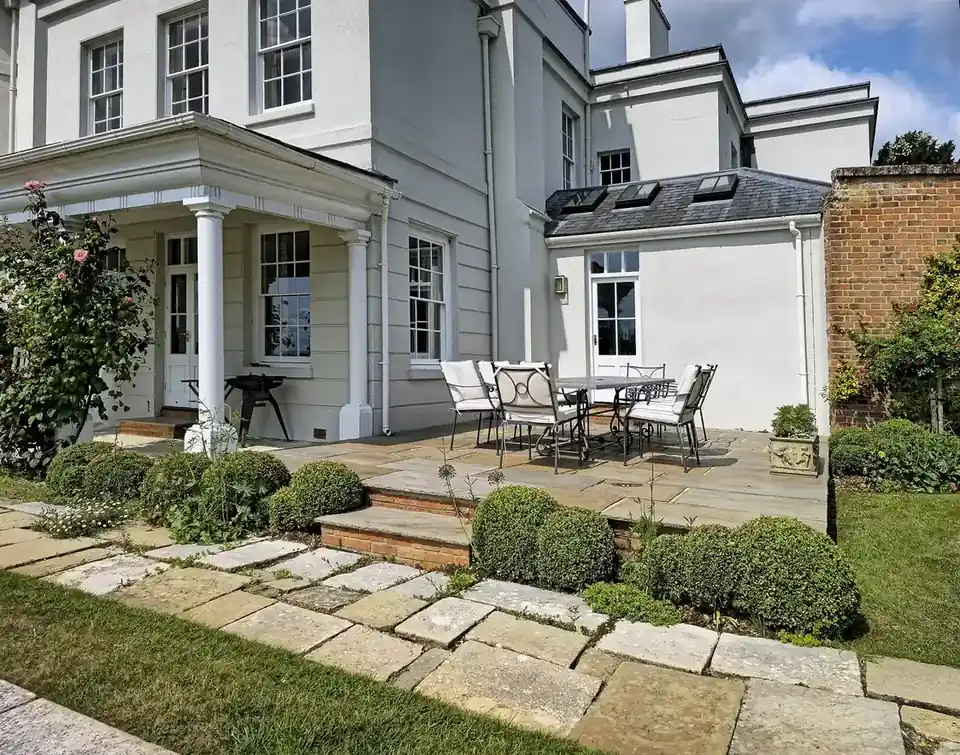
Ask how the slabs are bedded and pointed. Porcelain needs a slurry primer on the back or it will come loose, and natural sandstone wants a wet bed so the mortar does not mark the face. Five dabs of mortar under each slab will rock within a year or two. Joints filled with a resin compound will outlast a sand and cement mix by a long way, especially along a shaded fence line where moss loves a crumbling joint.