Gravel is the one driveway surface you can hear. The crunch tells you someone has pulled in before the engine stops, and on a badly built drive the same gravel is sprayed across the footway, carried indoors in shoe treads and pushed into ridges wherever the car turns. It’s the same stone in both cases. What differs is the work underneath. A gravel driveway in Hornchurch and Upminster costs us £45 to £70 per square metre, all in, which makes it the cheapest drive we lay. Resin bound runs to £80 to £120, so on a 100 square metre Emerson Park approach the difference comes to several thousand pounds. This guide covers which stone to pick, what goes under it on our clay, why we fit a grid, how to stop gravel reaching the pavement, and what gravel is like to live with. We’ve written about some of this elsewhere already, so where a topic is covered in more depth we link to it.
Gravel driveway cost in Hornchurch and Upminster, plot by plot
The £45 to £70 per square metre rate covers the whole build: excavation, a geotextile membrane, a compacted Type 1 base, a plastic stabilising grid, the edging and the gravel on top. That’s the job priced as a finished drive, nothing like the cost of a few bulk bags from a builders’ merchant. Our gravel driveways service page goes through the build stage by stage.
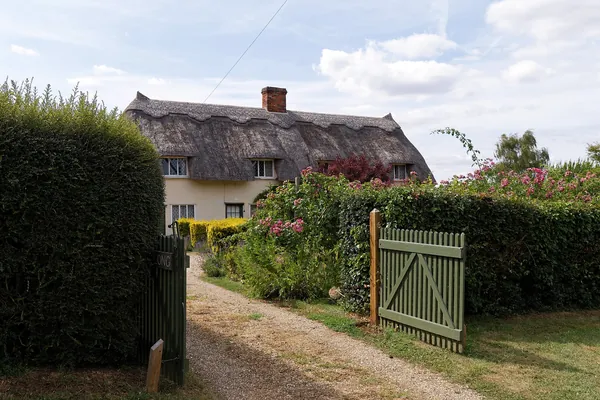
At that rate, here’s roughly what the common fronts in our patch cost:
- A Cranham bungalow with about 30 square metres to cover: £1,350 to £2,100
- An interwar semi in Hornchurch or Elm Park, around 45 square metres once the front lawn has gone: £2,025 to £3,150
- A detached house in Emerson Park with 100 square metres of approach: £4,500 to £7,000
Emerson Park is where gravel makes most sense. The estate was laid out from 1895 on the southern part of the old Nelmes manor, and its first houses were big detached villas, many on plots of close to an acre. A lot of that land has since been divided up for cul-de-sacs, but the original houses still tend to have long frontages and a turn at the top, and that’s the shape of drive where gravel saves you the most.
What moves you up or down the band
Jobs near £45 are usually flat with straight edges, sit on free-draining ground and use a standard buff or grey stone. Jobs nearer £70 tend to have an old gravel drive that has sunk into mud and has to be dug out first, or a long curved boundary that needs a lot of edging, or block aprons and borders, or a premium stone such as a particular granite. You might expect the gravel to be the expensive part. It’s actually one of the cheaper lines on the quote. If you want to see how gravel compares with resin, block and tarmac on the same fronts, our 2026 guide to new driveway costs puts all four side by side.
Angular gravel, pea shingle and the size that works
Pea shingle is small and rounded, nice to walk on in summer and cheap per tonne. It makes a poor drive. The round stones roll over each other like ball bearings, so they never lock together, and every time a tyre turns on them they get pushed into a heap.
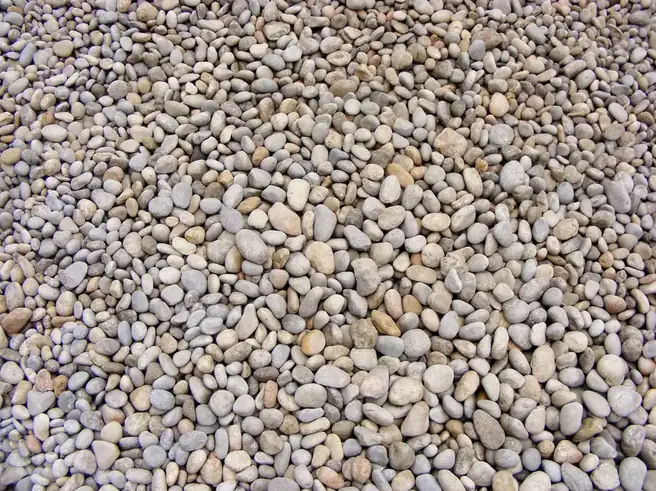
For a drive you need crushed angular stone, and we lay it in the 10 to 20mm range. The broken faces grip each other and the walls of the grid, so the surface stays firm. At the small end of the range it’s comfortable underfoot. Anything below about 10mm sticks in tyre treads and the soles of trainers, and it ends up on the doormat. Much above 20mm and the drive gets lumpy to walk on and hard to rake level.
Picking a colour against the brick
Most of Hornchurch is red or orange brick, and warm stones such as golden flint and buff go well with it. Greys and silver flint suit rendered fronts and the newer houses towards Upminster better. Before you choose, ask to see a sample when it’s wet. Most gravels go noticeably darker in rain, and in a Havering winter that’s how your drive will look for weeks at a stretch.
What goes under a gravel driveway on Hornchurch’s London Clay
Gravel lets rain straight through, which is why people choose it. Underneath, though, the water hits whatever subsoil you have. North of the railway, through Emerson Park, Ardleigh Green and Cranham, that’s mostly London Clay, which holds water and moves as it wets and dries. We explain why in our guide to driveway drainage on Havering’s London Clay, so here we’ll stick to what it means for gravel.
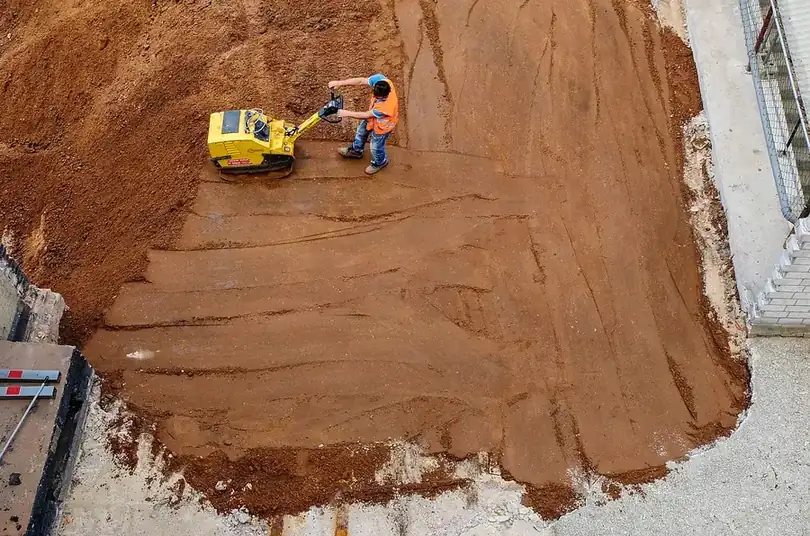
We dig out 150 to 200mm, lay a geotextile membrane on the bare clay and build up Type 1 in two layers, compacting each one. The finished base is at least 150mm thick. The membrane is the bit people skip. Without it, the first wet winter squeezes clay up into the stone, and the drive turns into a beige crust that holds puddles. South of the line, on the terrace gravels around Elm Park, rainwater drains away much faster, but the drive still needs a compacted base because the base is what takes the weight of the car.
Stabilising grids against loose gravel
This choice makes more difference to how the drive behaves than any other. Loose gravel on a good base can look tidy on the first day. Within a few months there are two grooves where the tyres run, a ridge of stone where you swing in, and bare patches near the gate.
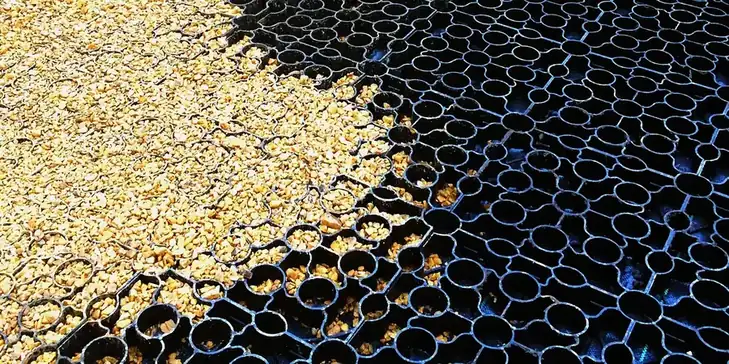
A grid is a set of plastic honeycomb panels that clip together over a thin bedding layer. We fill the cells with stone and leave a light covering on top, so once it’s dressed the plastic disappears from view. When a tyre rolls over it, the cell walls take the sideways push that would otherwise shove the gravel along, and the load spreads out across the base. It adds only a few pounds per square metre to the job, which is why nearly every gravel drive we quote has one.
When loose gravel is fine
Loose gravel is fine on a garden path, a strip by the bins or a corner that only gets walked on. Anywhere a car turns or brakes, you need the grid.
Edging, and keeping the gravel off the pavement
A gravel drive needs a firm edge on every side. We use timber, steel, concrete kerb or a soldier course of block, bedded and haunched in concrete. The edge stops the grid shifting and keeps the stone off your lawn and flower beds.
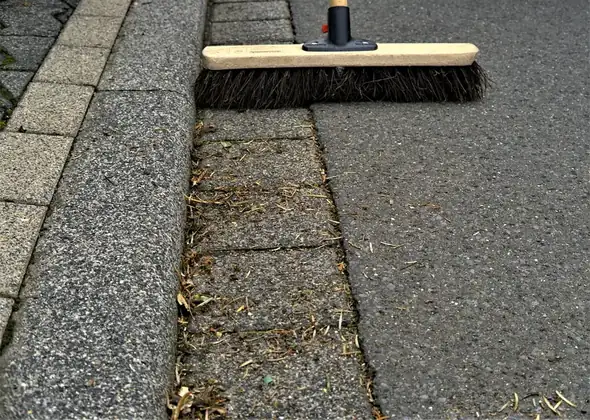
The weak point is the end of the drive at the road. Tyres pick up stones and drop them on the footway, and heavy rain washes out more. The government’s guidance on front gardens suggests a strip of block paving or asphalt at the entrance to stop this, and we do the same. We build a solid apron across the gateway, long enough for the tyres to drop any loose stones before they reach the public footway. That’s more than a tidiness issue. Stones on the footway are a trip hazard, and section 148 of the Highways Act 1980 makes it an offence to deposit anything on a highway that gets in the way of people using it. A council is unlikely to prosecute over a few pebbles, but a solid apron means the question doesn’t come up.
The apron also meets the crossover, where a car crosses the footway to reach your drive. If you need a new dropped kerb, Havering Council builds that and you apply to them separately. Our step-by-step guide to getting a dropped kerb in Havering explains the fee and the best order to do things in, so that the apron and the new kerb end up at the same level.
Weeds, membranes and the twice-yearly rake
People expect the membrane to stop weeds for good. It stops roots coming up from the soil below, and on clay it keeps the base clean, which matters more. But seeds blow in on the wind, land on top and germinate in the dust and grit that builds up between the stones.
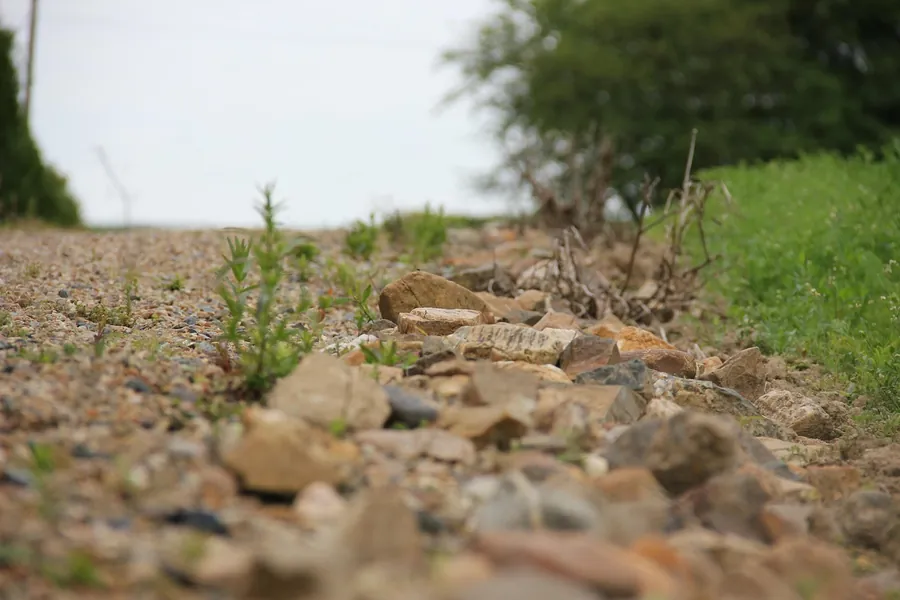
A weed that starts from the top has shallow roots, though, and pulls straight out of gravel. A few minutes with a hoe on a dry day sorts most of it. Autumn leaves are the bigger problem. Leave them to rot on the drive and they turn into a thin layer of soil, which is exactly what seeds need. Rake the drive in late autumn to lift the leaves off and level any ruts, then rake again in spring. On a gridded drive, a couple of bags of matching stone every few years keeps the top layer looking fresh. A loose drive needs topping up much more often.
Why gravel keeps you clear of the planning question
Since October 2008, covering more than five square metres of a front garden with a surface that doesn’t drain has needed planning permission, unless the rainwater runs off to a lawn, border or soakaway on your own land. Gravel lets water through its full depth, so it doesn’t run into that rule. The government guidance on permeable surfacing of front gardens lists gravel among the surfaces that need no permission at any size.
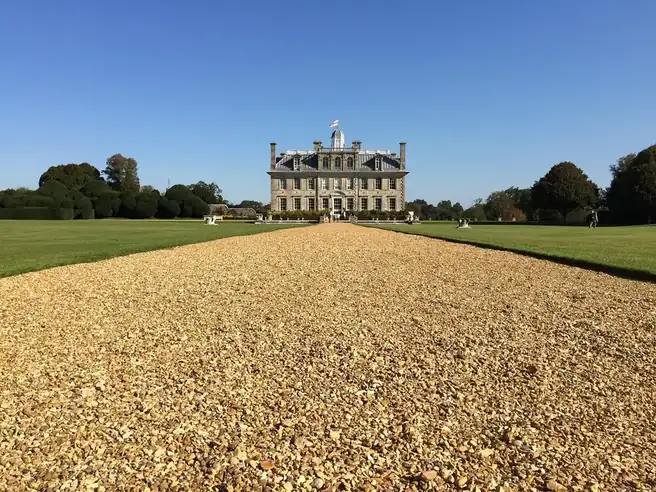
There are still exceptions. They include Gidea Park’s Article 4 streets, flats and maisonettes, and listed buildings, and our guide to driveway planning permission in Havering covers each of them. It’s worth reading before you book anything.
Gravel also helps with drainage on your street, not just with planning. The RHS advice on permeable paving says non-porous hard landscaping can raise rainwater run-off by as much as 50 percent. On clay, a gravel drive over a deep stone base holds rain and lets it drain away slowly, rather than sending it straight into a road gully. The RHS also suggests keeping pockets of soil for planting, and a bed or two let into a large gravel drive softens the look without costing much.
Living with gravel: the good bits and the awkward ones
The crunch is the reason plenty of our customers choose gravel. On a long drive set back behind a hedge, you hear any visitor before they knock, and anyone trying to creep up to the house can’t do it quietly. It’s also easy to get under if a drain or cable ever needs work. The stone comes off, the job gets done, and the stone goes back on.
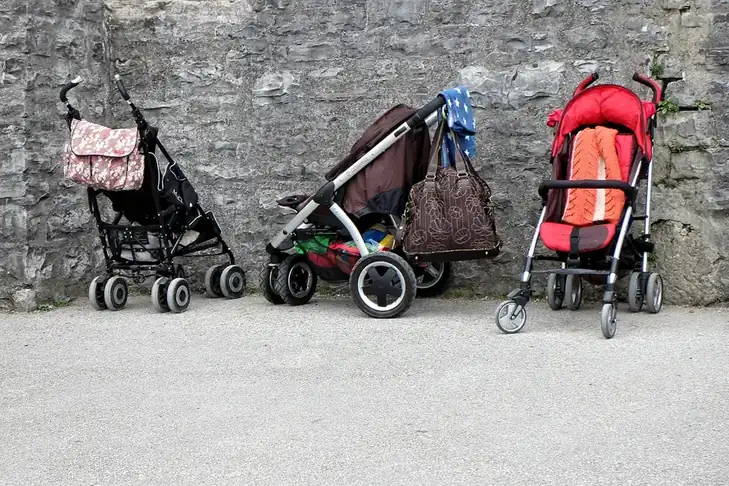
The downsides are real, and you should know them before you choose it:
- Wheelchairs and mobility scooters sink in gravel. A grid helps but doesn’t cure it, and the government guidance itself calls loose gravel unsuitable for wheelchairs. Pushchairs, wheelie bins and wheeled suitcases are hard going too.
- You can’t shovel snow off gravel without throwing half the stone onto the lawn. On the handful of snowy days Havering gets most winters, tread it down or wait for the thaw.
- On a steep slope the stone creeps downhill, grid or no grid. Most fronts round here are close to level, but where a drive drops towards the road we’d lay the lower end in block.
- Stilettos and little ride-on toys both struggle. And children will happily tip handfuls of the stuff into the flower beds.
Most of these have the same fix. A block or resin path from the gate to the front door handles feet, bins and buggies, and the gravel either side takes the cars. It costs more than gravel throughout, but much less than resin throughout, and on a wide Emerson Park or Cranham frontage it’s often the layout we’d suggest.
Book a free gravel driveway survey in Hornchurch or Upminster and we’ll dig a trial hole to see what’s underneath, then price the grid, the base and the gateway apron separately on the quote.