Most driveways in Havering go in without a planning application, and the ones that get into trouble tend to be on a short list of streets where the owner assumed the usual rules applied. The general rule is national: since 1 October 2008 you can pave a front garden without permission as long as the surface is permeable or drains to somewhere soft, and only an impermeable surface over 5 square metres that sends water to the street needs an application. Havering then layers its own controls on top. The borough has eleven conservation areas, an Article 4 direction in Gidea Park that removes the right to lay a front or side hard surface at all, a separate Article 4 in Cranham covering gates and walls, and a dropped kerb process with a £261 application fee that only the council or its approved contractors may carry out. This post walks through each layer so you can work out which ones apply to your house before you spend money on a drive you might be ordered to dig up.
The short answer for most of Hornchurch and Upminster
If you own a house (not a flat) on an ordinary street in Hornchurch, Upminster, Elm Park or Cranham outside a conservation area, you can replace or extend your front driveway without applying to the council as long as the water has somewhere to go other than the road. That covers a gravel driveway, permeable block paving, resin bound stone over an open base, or any surface laid to fall towards a lawn or border that can take the run-off.
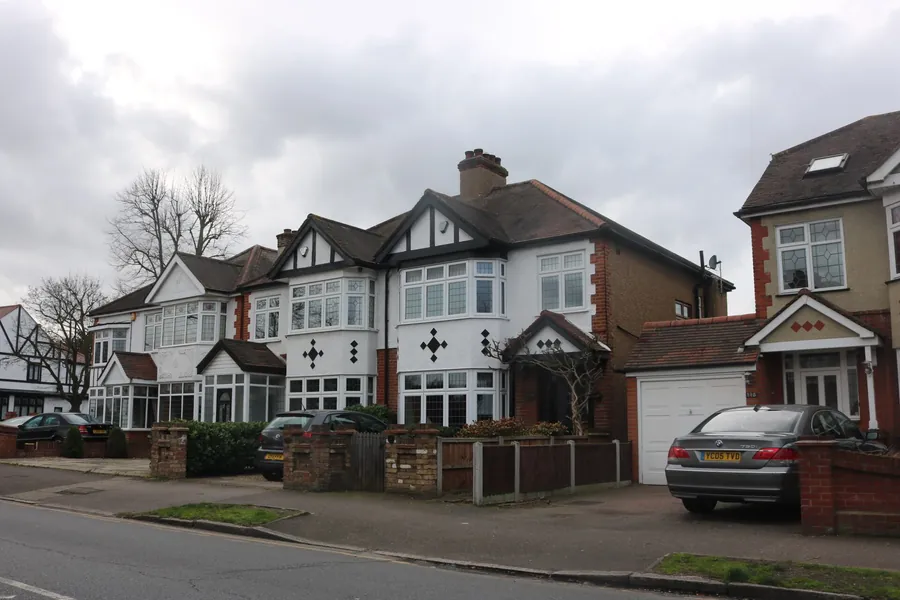
The government’s guidance on the permeable surfacing of front gardens explains why the rule came in: thousands of paved fronts in London were sending rain straight into road gullies that were never sized for it. In Havering that is not an abstract worry. The council’s 2025 flood strategy records surface water as the most common cause of flooding in the borough in recent years and lists Elm Park, Cranham and Ardleigh Green East among fifteen Critical Drainage Areas. A front drive that soaks up its own rain is part of the fix, which is why the planning system rewards it.
So the first question is not “do I need permission” but “where does the water go”. Get that right and most of Havering is straightforward. The rest of this post is about the places where it is not.
What the 2008 rule actually says
The Planning Portal’s page on paving your front garden puts it in two sentences. No permission is needed for a new or replacement driveway of any size if it uses permeable surfacing such as gravel, permeable concrete block paving or porous asphalt, or if the rainwater is directed to a lawn or border to drain naturally. If the surface to be covered is more than 5 square metres, permission is needed for a traditional impermeable driveway that does not provide for the water to run to a permeable area.

A few things follow from that wording that catch people out:
- “Permeable” is about the whole build, not the top layer. Resin bound stone drains through, but only if the base under it drains too. Resin laid over an old concrete slab with no outlet is an impermeable surface in planning terms.
- A standard tarmac drive is impermeable. It is fine if it falls to a border or a soakaway; it needs permission if it falls to the pavement.
- The 5 square metre threshold is cumulative. Adding 4 square metres of sealed paving to an already-sealed front does not reset the clock.
- Directing water to a lawn means a lawn that exists and will stay. A strip of grass you plan to pave next year does not count.
The rule applies in the same way across England, so none of this is Havering being awkward. Where Havering does get specific is in the next three sections.
Havering’s eleven conservation areas
The council’s conservation areas page lists eleven: Corbets Tey (designated 1990), Cranham (1968), Gidea Park (1970, extended 1989), Havering-atte-Bower (1968), Langtons (2010), North Ockendon (1990), RAF Hornchurch (1989), Rainham (1968), Romford (1968), St Andrews (2010) and St Leonards (1984, amended 1990). For a Hornchurch or Upminster driveway the relevant ones are St Andrews, which centres on the Grade I church and churchyard in the old village; Langtons, which takes in the house, Fairkytes and the Queen’s Theatre on the north-west edge of the town centre; RAF Hornchurch around the surviving airfield buildings; and the two village cores at Corbets Tey and Cranham.
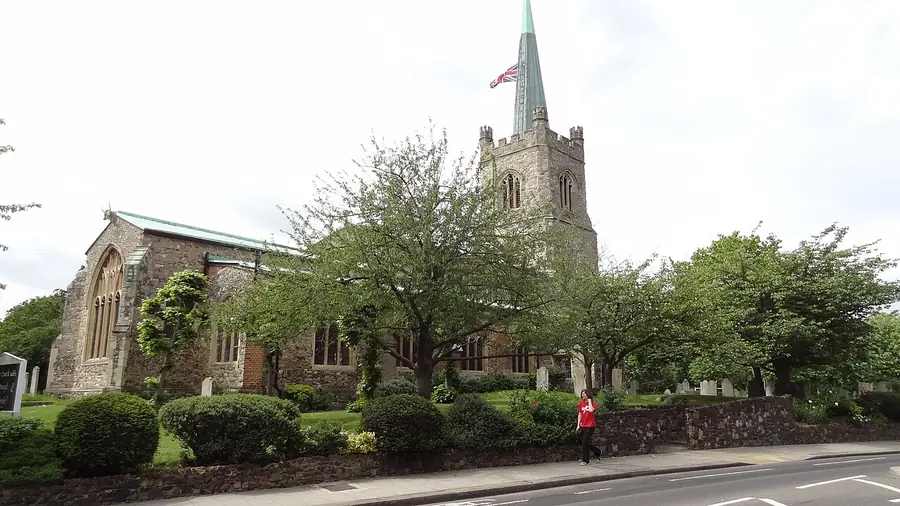
Two places people assume are conservation areas are not. Emerson Park is covered by the Emerson Park Policy Area guidance of 2009, which controls plot subdivision, extensions and the spacious character of roads like Nelmes Way and Parkstone Avenue, but it says nothing about front gardens or hard surfaces. Upminster Court on Hall Lane is a Grade II listed house with a registered garden, not an area.
Being inside a conservation area does not, on its own, remove your right to lay a permeable drive. The 2008 permitted development right still applies unless the council has made an Article 4 direction withdrawing it. The council’s heritage page lists directions for Gidea Park, Havering-atte-Bower and Cranham and none for St Andrews, Langtons, Corbets Tey, RAF Hornchurch or Rainham. We treat that as the current position, but conservation area status does make the council more likely to notice, so a quick email to the planning team before work starts costs nothing and removes the doubt.
Gidea Park: the Article 4 that catches driveways
This is the one that matters. Gidea Park, or Romford Garden Suburb, was built in 1910 and 1911 as a town planning exhibition, with houses by more than a hundred architects set in planted gardens, and the council has decided that the gardens are as much a part of the place as the houses. Its Article 4 direction, made on 31 December 2015 and confirmed on 24 June 2016, removes permitted development at the scheduled addresses for a list of works that includes the provision within the curtilage of a dwellinghouse of a hard surface, or the replacement in whole or in part of such a surface, to the front and sides of the house. In plain terms: on those addresses a front driveway needs planning permission whether it is permeable or not, and so does replacing one that is already there.
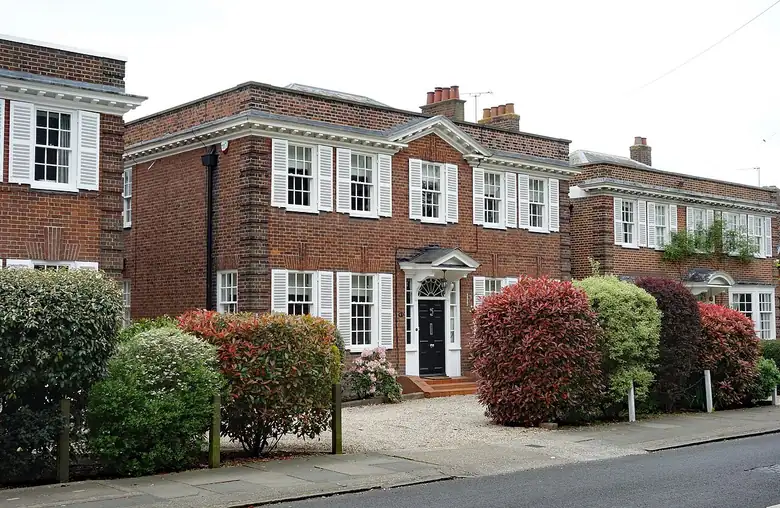
The notice of the Gidea Park Article 4 direction schedules the affected house numbers street by street. Balgores Lane, Balgores Crescent, Balgores Square, Heath Drive, Parkway, Reed Pond Walk, Gidea Avenue, Gidea Close, Heath Close, Elm Walk, Mead Close, Brook Road, Repton Avenue, Squirrels Heath Avenue, Tudor Avenue and selected numbers on Main Road are all in it. Not every house on each road is listed, so check your own number against the schedule rather than assuming.
The council enforces it. At 49 Heath Drive an enforcement notice was served on 22 July 2022 for the formation of a hard surface in the front and side garden. The owner appealed, and on 12 September 2023 a planning inspector dismissed the appeal and upheld the notice, giving three months to remove all the hard surfacing. The inspector accepted that a lot of front gardens along Heath Drive were already hard surfaced, and dismissed the appeal anyway, because the conservation area appraisal identifies the loss of gardens to parking as a negative factor and the Article 4 direction exists to stop more of it. If you are on a scheduled address, “the neighbours have done it” is not a defence; it is the reason the council is looking.
What does get approved in Gidea Park tends to keep a substantial planted front, use a surface that reads as garden rather than car park, and leave the boundary hedge or wall in place. If that is the kind of drive you want anyway, an application is a formality worth doing properly rather than a reason to avoid the street.
Cranham: gates, walls and fences
Cranham’s conservation area has been in place since 1968 and the council’s heritage page records an Article 4 direction there requiring planning permission for gates, walls, fences or other means of enclosure. It does not list hard surfaces, so a permeable drive in Cranham falls under the ordinary 2008 rule. The trap is the boundary. A new drive almost always means moving or removing a front wall, widening a gap in a hedge, or putting in a gate, and in the Cranham conservation area each of those is an application in its own right.
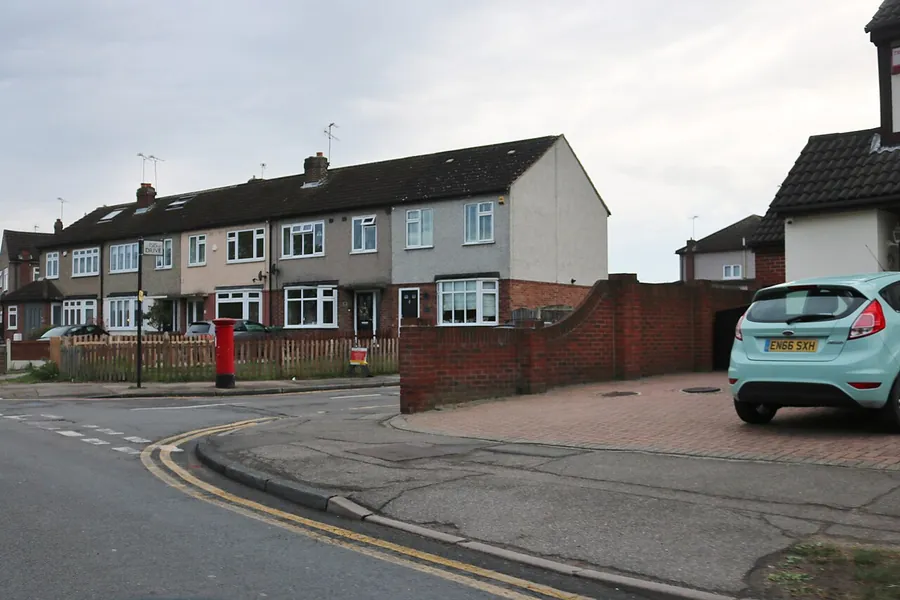
Practically, that means working out the boundary first. If the existing opening is wide enough for the car you drive, a drive laid behind it is a surfacing job and nothing more. If you need the wall taken back by a metre, that is a planning application, and the sensible order is to get the boundary decision before you price the paving, because a refusal on the wall changes the whole layout.
The same thinking applies anywhere else in Havering where the council has an interest in the frontage. Even outside the Article 4 areas, a boundary wall over a metre high next to a highway needs permission under the general rules, and most interwar front walls in Hornchurch sit right on that line.
Dropped kerbs are a separate application
None of the above gets you onto the drive. Crossing the pavement needs a dropped kerb, and in Havering that is a council process rather than a planning one, with its own fee and its own rules. The council’s dropped kerb page sets out a non-refundable £261 application fee. An officer then inspects and quotes the construction cost. The council is blunt about who does the work: it is illegal to have a dropped kerb constructed by anybody other than the council or its approved contractors, and an unauthorised crossover is removed at the owner’s expense.
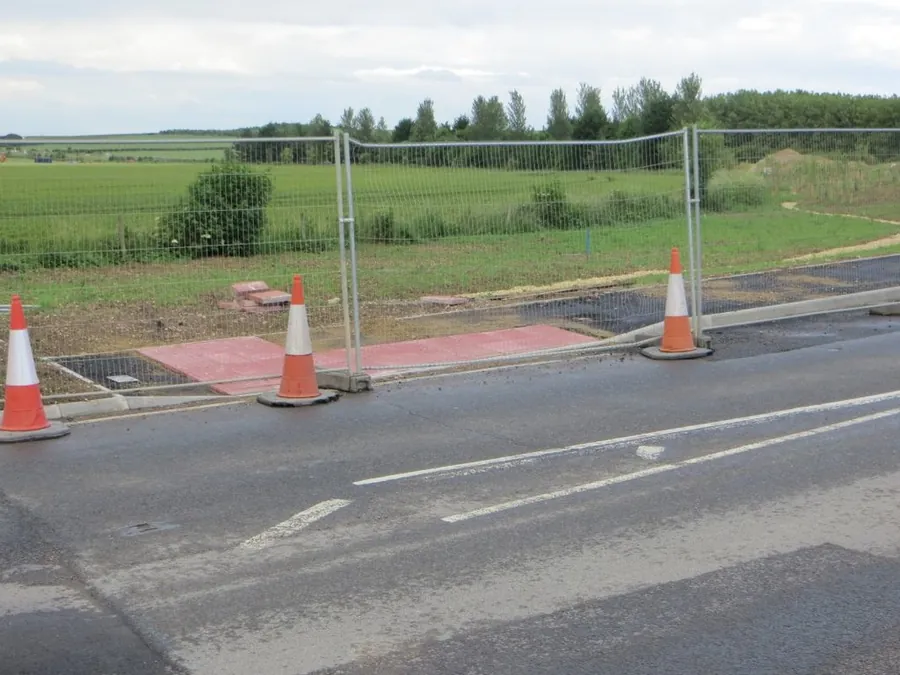
The second layer is the road. Havering publishes a list of roads where forming a new means of access needs planning permission on top of the crossover application. It is long, and for this area it includes Corbets Tey Road, Hall Lane, St Marys Lane, Station Road in Upminster, Butts Green Road, Wingletye Lane, Hacton Lane, Avon Road, Billet Lane, Front Lane, High Street and North Street in Hornchurch, Suttons Lane, Suttons Avenue, Upminster Road and Upminster Road North. If you are on one of those, the sequence is: planning permission for the access, then the £261 crossover application, then the drive. Doing it in the other order risks a finished drive with no legal way onto it. Our cost guide for Hornchurch and Upminster driveways puts figures against each of those steps.
Flats, maisonettes and the other exceptions
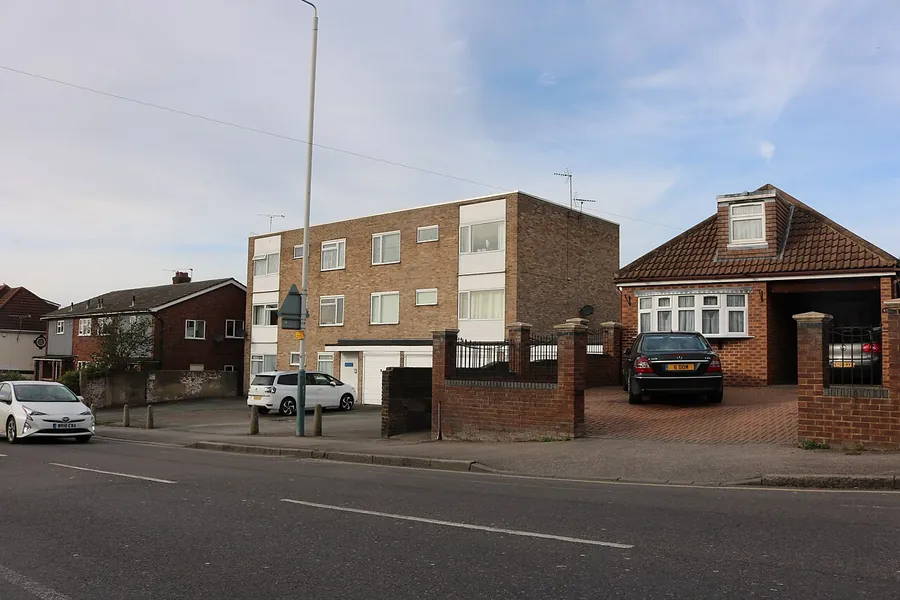
The 2008 permitted development right belongs to houses. The Planning Portal is explicit that it does not apply to flats and maisonettes, and nor does it apply where a planning condition on the house, or an Article 4 direction, has removed it. In Hornchurch that catches two common situations: the converted interwar house split into an upstairs and downstairs flat, where the shared front is often paved by whichever owner has the car, and the purpose-built blocks along roads like Upminster Road with a shared forecourt. Both need a planning application, whatever the surface. Havering also asks flats and maisonettes to use the full planning permission form for a dropped kerb rather than the householder form.
Listed buildings are a separate regime again. The cottages at 1 to 8 Harwood Hall Lane in Corbets Tey are listed, and works within the curtilage of a listed building that affect its setting can need listed building consent even when they would be permitted development elsewhere. If your house is listed, or you are not sure, that is a conversation to have with the council’s conservation officer before any digger arrives.
What to do before you book a driveway in Havering
Put the checks in this order and you will not be the next 49 Heath Drive:
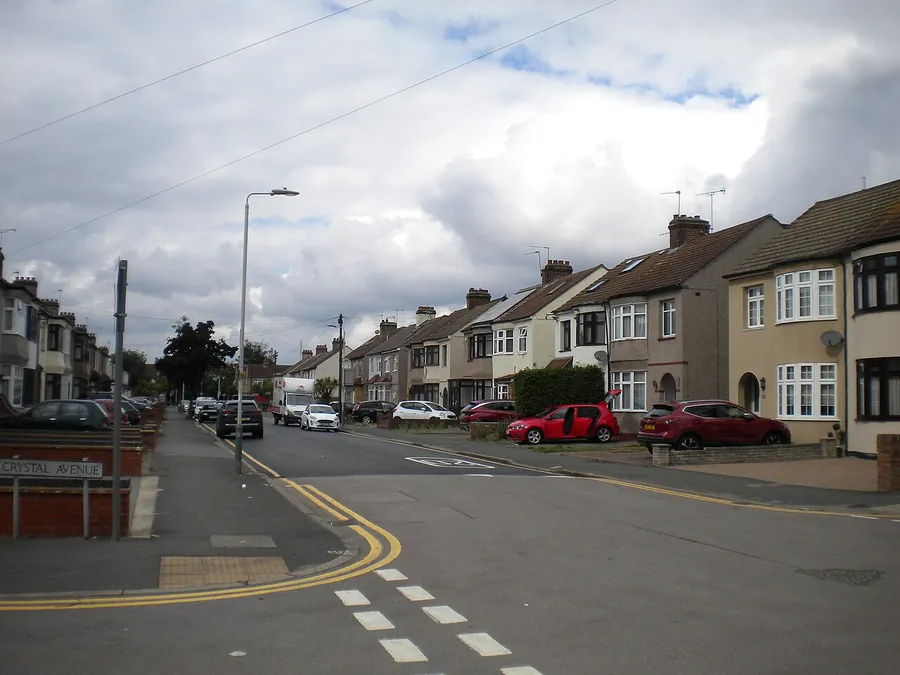
- Find out whether you are in a conservation area. The council’s heritage pages have the maps.
- If you are in Gidea Park, check your house number against the Article 4 schedule. If it is there, you are applying for permission regardless of surface.
- If you are in Cranham, treat any change to the wall, gate or hedge as an application.
- Everywhere else, make sure the design is genuinely permeable or drains to a border, and keep the specification that proves it. A block paving driveway laid on an open-graded base with permeable jointing, or a resin bound surface over a drained base, both qualify; a sealed surface falling to the road does not.
- Check whether your road is on the classified list before applying for the dropped kerb, and apply for the kerb before the drive goes in.
- If the property is a flat, a maisonette or listed, assume an application is needed and ask.
We do this on every job because an order to remove a drive is a far more expensive problem than a planning application. If you want us to look at your frontage, tell you which of the above applies and price the drive accordingly, ask for a free site visit in Hornchurch or Upminster.