The pavement outside your house is not yours, and that is the root of every dropped kerb question in Havering. You can spend £5,000 on a beautiful front drive in Hornchurch or Upminster and still have no legal way to drive onto it. Getting a dropped kerb in Havering means a £261 application to the council, a site inspection, a separate quote for the building work, and a wait the council itself puts at up to 16 weeks. On top of that the borough sets hard minimums: a parking space of 2.4 by 4.8 metres, nothing within 10 metres of a junction, and no crossover closer than 2.7 metres to a neighbour’s. This guide goes through Havering’s own policy one step at a time, in the order you will actually meet each step. It also covers the bit most people get wrong, which is when to book the driveway itself.
Getting a dropped kerb in Havering starts with the order of jobs
Most people find a driveway firm first and think about the kerb second. In Havering that order can cost you money. The council’s crossover policy, approved in April 2023, makes the drive and the kerb depend on each other. The council will not build the crossover until the parking area behind it is paved, yet its quote for the kerb expires three months after it is issued. Do things in the wrong sequence and you either sit with a finished drive you cannot use, or you watch the quote lapse and pay the application fee again.
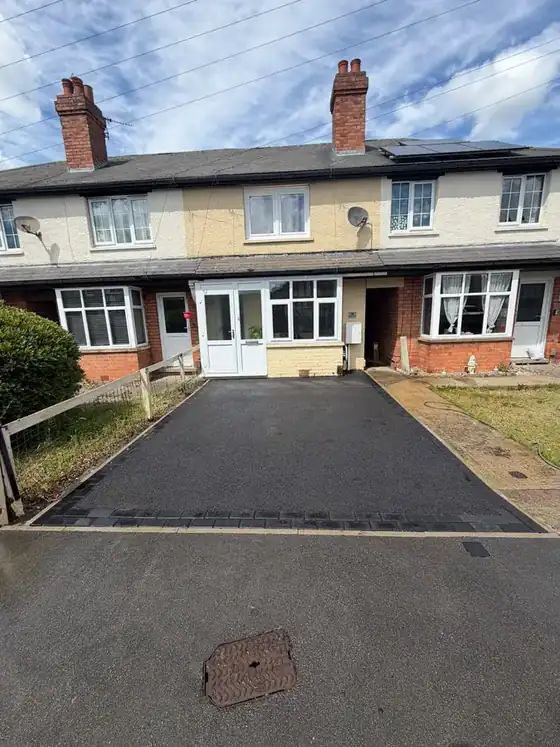
When we price a tarmac driveway or block paving for a house with no crossover, the kerb is the first thing we talk about, before colours or edging. It sets the width of the opening, it decides where the levels have to land at the boundary, and it puts a floor under the timetable. The surface can be planned around it. It can’t go the other way round.
So the short version: check you qualify, apply, build the drive while the application is in the queue, then let the council finish the job at the kerb line.
Measure your front before you pay anything
The £261 is non-refundable, so spend ten minutes with a tape measure before you spend it. Havering wants a parking area inside your own boundary at least 2.4 metres wide and 4.8 metres deep. Measure from the back edge of the pavement to the face of the house, or to the bay window if you have one, because the bay is what the bonnet will hit.

There is one concession. If the space is at least 3 metres wide, so a car could sit at an angle, the depth can drop to 4.6 metres, and the policy calls that an absolute minimum. Below that, expect a refusal, even if your own car is small. The council’s reasoning is blunt: houses get sold and cars get bigger, and a later owner’s estate car hanging over the footway becomes the council’s enforcement problem.
Two more conditions catch people out on shallow fronts, which are common on the older terraces and semis around Hornchurch. You need a clear path from the street to the front door with the car parked. And any front wall in the way has to come down before the council will build anything. A Blue Badge holder who cannot meet the depth may be offered a relaxation or a disabled bay outside instead, so ask rather than assume.
What the street outside can rule out
Your front can pass with room to spare and the road can still say no. Havering will refuse a crossover within 10 metres of a junction, on any road with a speed limit of 40mph or more, inside the zig-zags of a zebra or signal crossing, or anywhere it would interfere with a traffic island, refuge or width restriction. A block paved footway beside a bus stop is a likely refusal too.
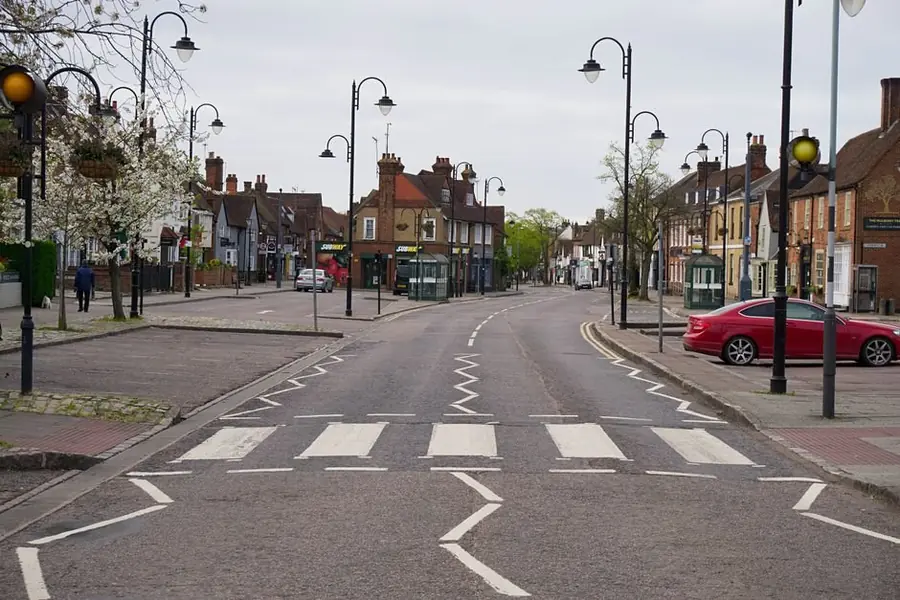
Then there is the street furniture. A new crossover has to sit at least 2.7 metres from an existing one, measured between the flat sections of kerb. If it can’t, it gets joined onto the neighbour’s crossover at your cost. Lamp columns need 1.5 metres of clearance and can sometimes be moved, again at your cost, though only a short way so the street lighting stays even. Telegraph poles and BT or cable cabinets need 0.45 metres. A healthy council tree in front of your house is normally the end of it: the policy says removal will usually be refused, and that a dead tree doesn’t change that, because the council wants the pit for a replacement.
Two rules are easy to miss. If you already have reasonable access from the side or the rear, a new front crossover should be refused. And in a controlled parking zone, or a road with heavy on-street parking stress, losing kerb space for everyone else can sink the application. The policy adds that a neighbour having a crossover does not mean you will get one.
Applying to Havering Council: what the £261 actually buys
Applications go through the online form linked from the council’s apply for a dropped kerb page. The fee covers up to three site visits: one to assess the front and, if approved, a works check later. Any visits beyond three are charged. The form has an estimate calculator, which is worth running, but treat its answer as a rough guide. The real figure arrives in writing after the inspection.

If you meet the criteria you get a quote, and the council may suggest a different position rather than refusing outright. You then pay the full amount before any work is scheduled. If you are refused, the reasons come in writing and any appeal goes through the council’s complaints process.
Planning sits in front of all of this for some houses. The council won’t look at a crossover until a planning decision exists if your road is a classified one, if you are in a conservation area, if the house is listed, or if it is a flat or maisonette. That rules out a long list of roads around here. Our post on driveway planning permission in Havering covers that list and the conservation areas street by street, so we won’t repeat it here.
The detail behind every rule in this guide is in the council’s Domestic Vehicle Dropped Kerb Policy. It runs to ten pages and the useful part is section 3.
What the kerb itself costs on top of the fee
Havering does not publish a flat price for building a crossover. It quotes each one after the visit, because the cost depends on the width, the footway and what is in the way. What the policy does fix is the standard size. The preferred crossover is 4.5 metres along the kerb line: a 2.7 metre flat section with a 0.9 metre ramp kerb at each end. Where the road layout is tight it can be cut to 4.2 metres. Wider openings for a two-car frontage are possible but have to be justified on site.
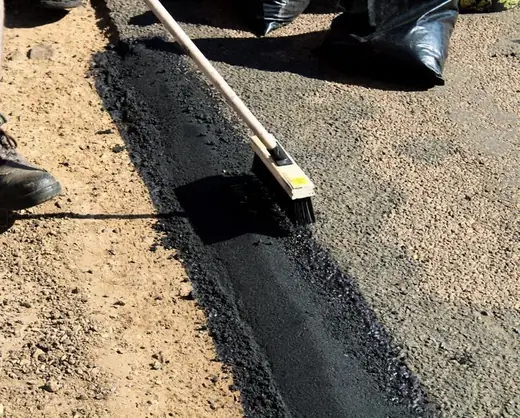
The construction is asphalt or concrete across the full footway depth, matched to the existing road. The real budget risk is in the extras, all of which the policy puts on the applicant:
- moving a lamp column, if the lighting team agrees it can move at all
- altering utility apparatus such as BT boxes, water covers or cable TV cabinets
- tree assessment, and any approved removal or replanting, with compensation worked out on the council’s CAVAT valuation
- changing parking restrictions in a CPZ
- conservation-area materials chosen with the conservation officer
On a plain 1930s road in Hornchurch with nothing in the way, the quote is usually just the crossover. On a corner plot with a lamp column outside it can be a different conversation. If you’re adding the kerb to a wider budget, our driveway cost page breaks down the drive side of the bill.
Timing the dropped kerb with your new driveway
This is the part we get asked about most, and the policy answers it if you read two clauses together. The council will not start the crossover until it is “satisfied that the applicant’s forecourt area is suitably paved and any such barriers are removed.” And quotes are “valid for a period of three months from the date they are issued,” after which you reapply and pay the assessment fee again.

So here is the sequence we use with customers:
- Measure the front and check the road against the siting rules above.
- If your road or house needs planning, get that decision first.
- Apply for the kerb and get on with the driveway quotes while the inspection is pending.
- When the council’s quote arrives, book the drive to be finished well inside the three months.
- We take out the front wall, dig, lay the sub-base and surface, and set the levels to meet the future kerb line, falling back towards the house or to a soakaway.
- Pay the council, tell them the forecourt is ready, and wait for their contractor.
Drainage matters at step five. Section 163 of the Highways Act stops water running off private land onto the road, and Havering can refuse a crossover where the drive sheds rain straight across the footway. A permeable surface, or a channel drain at the boundary, settles that before the inspector asks.
Then there is the gap. Between the drive being finished and the crossover being built you still cannot drive across the pavement. Section 184 of the Highways Act 1980 is the law behind the whole process, and Havering’s policy says it will enforce against anyone caught crossing the footway without an approved crossover. Plan for a few weeks of parking on the road. It’s annoying, but cheaper than the alternative.
After the council builds it
Once the crossover is in, it still isn’t yours. The policy is clear that a crossing never belongs to the homeowner and stays part of the public highway, maintained by the council. That is useful if a utility company digs it up later. It also means any footway parking bay outside your house is taken away once the crossover goes in.
What it doesn’t change is who builds it. Only the council and its approved contractor work on crossovers in Havering, and a kerb dropped by anyone else gets taken out with the bill sent to you. We covered how to use that rule to filter out the wrong firms in our guide to choosing a driveway company in Hornchurch and Upminster, and it’s the quickest test there is. Ask a firm who will build your kerb. If they say “us,” keep looking.
If you have a front that measures up and want the drive and the kerb lined up properly, book a free site visit in Hornchurch or Upminster and we’ll measure it against Havering’s rules before you spend the £261.