Block paving is the surface most people picture when they think of a proper drive, and it is also the one where quotes in Hornchurch and Upminster vary the most. Our installed price runs from £75 to £115 per square metre. On a typical interwar semi that adds up to somewhere between £3,400 and £5,200. Where your job lands in that band depends on four things: the block you pick, the ground under your front garden, how the water gets away, and how many cuts the design needs. This post looks only at block paving. Our guide to new driveway costs in Hornchurch and Upminster covers resin, tarmac and gravel too. Below we go through the per-metre price by block type and the totals for the fronts we price most often. We also explain why a drive near Emerson Park can cost more than the same size in Elm Park, how the 5m² planning rule affects the base, and where the £261 Havering dropped kerb fee fits.
Block paving driveway cost per m², by block type
The block is only about a third of the price. Most of the cost goes into the ground underneath. The block still sets your starting point, though, so here is where each type sits once everything else is included.
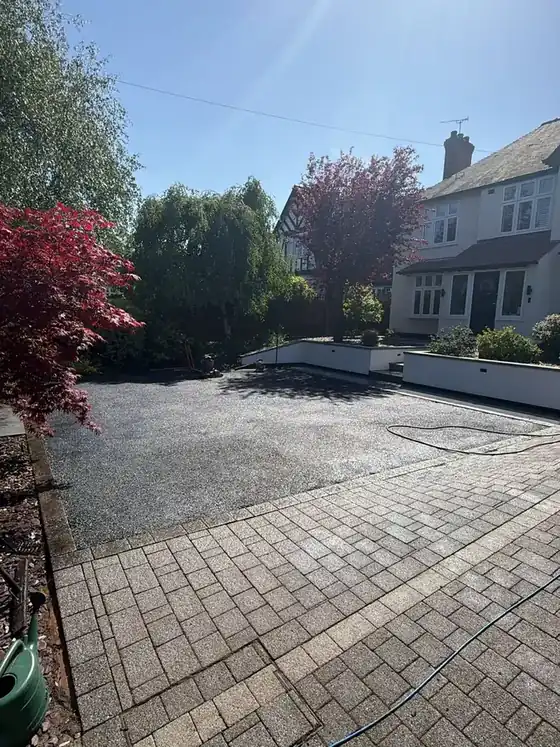
- Standard 60mm concrete block in a plain brindle, charcoal or buff: about £75 to £90 per m²
- Tumbled or textured concrete block, the sort that looks twenty years old straight off the pallet: about £85 to £105 per m²
- Clay pavers: from roughly £100 per m², and past £115 once a design needs a lot of cutting
- Permeable concrete block on an open-graded base: usually £10 to £20 per m² on top of the standard equivalent
All of those prices include breaking out the old surface, removing it, excavating, a compacted Type 1 sub-base, edge restraints set in concrete, a screeded sand bed, the blocks, compaction and kiln-dried jointing sand. Our block paving driveways page explains each stage. If a quote you have is well below £75 a metre, one of those lines is missing. In our experience it is nearly always the base.
What block paving costs on the fronts we see most
Most fronts in Hornchurch and Upminster fit one of four shapes. The figures below use the per-metre band above. Small jobs sit at the top of the range because skip hire, a digger and a day of setting out cost the same whether the drive is 20 square metres or 50.
A terrace or small front, 25 to 30m²
These are the shorter terraces and the narrower ex-council fronts around Harold Hill and parts of Elm Park. They take one car, maybe a small second one. Expect £2,400 to £3,300. Very little of that goes on blocks. Most of it is labour, the skip and the edging, and an edge costs much the same however small the front is.
The 1930s semi, 40 to 50m²
This is the most common job we price. The front garden is around 9 metres wide by 5 deep, and the bay window cuts into one corner. Block paving here usually costs £3,400 to £5,200. Clay pavers or a full herringbone with a double border push it towards the top.
The semi with a side run to the garage, 55 to 65m²
If you want the blocks to carry on down the side passage to an old garage, add the length of the passage. That often brings the area to about 60 square metres and the price to £4,500 to £6,900. Before you spend that, read our comparison of resin, block paving and tarmac on a 1930s semi. It explains why many of these passages only take one car, which makes them poor value to pave.
The Emerson Park plot, 90 to 110m²
The bigger Edwardian and interwar plots in Emerson Park, north of Hornchurch town centre, often have a turning area and a long run to the gate. At 100 square metres you are looking at £7,500 to £11,500. The fixed costs are spread over more ground here, so the per-metre rate eases slightly. The clay underneath usually takes that saving back.
London clay and the sub-base: the biggest swing in the price
Two semis of the same size, one in Elm Park and one off Ardleigh Green Road, can be £800 apart on block paving even when the blocks are identical. The difference is in the ground.
South Hornchurch, Elm Park and much of south Upminster sit on Thames terrace gravel. It drains freely and hardly moves from one season to the next. Further north, around Emerson Park, Ardleigh Green, Cranham and parts of Upminster, you are on London Clay. Clay swells when it is wet, shrinks in a dry summer and holds water for a long time. The geology here is unusual in other ways too. In 1892, workers building the Romford to Upminster railway cut through a bed of boulder clay left by the Anglian ice sheet about 450,000 years ago. That spot is now protected as the Hornchurch Cutting SSSI, because it shows the ice sheet reached about as far south here as it ever did in Britain. Your drive will not hit boulder clay, but it is a fair sign that the ground in this corner of Havering is not simple.
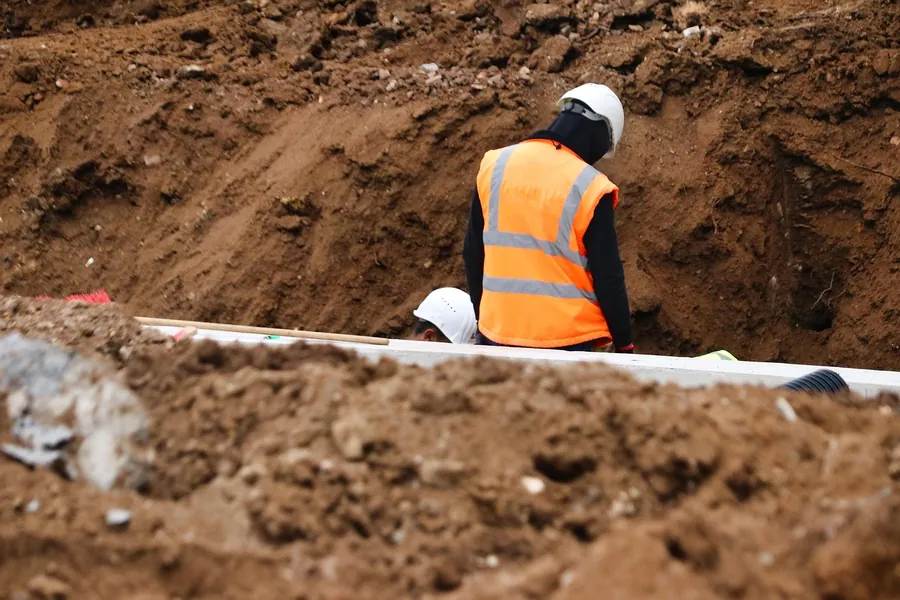
On gravel, a driveway dig of around 200 to 250mm is usually enough. That covers the 60mm block, the sand bed and a compacted stone base. On clay we go to 300mm or more. We lay a geotextile membrane to stop the clay pumping up into the stone, then compact the Type 1 in two layers. On a 45 square metre front, that extra 100mm adds about four and a half cubic metres of dug-out clay and the same amount of new stone. Between the extra skip, the stone and the time to compact it, that is often £400 to £700 more.
This is the part of the job you never see once the blocks are down, so it is the easiest part to cut. A thin base on clay shows up within two or three winters as a dip by the gate where the car turns. Our post on driveway drainage on Havering’s London clay explains why water sitting in the base makes things worse.
Permeable or standard block, and the 5m² front garden rule
Since October 2008, paving a front garden has had a planning rule attached. The Planning Portal’s guidance on paving a front garden says that if you cover more than five square metres with an impermeable surface that does not drain to a permeable area, you need planning permission. Every block paved drive in this post is well over five square metres, so the question is how the water gets away, and you pay for the answer either way.
You have two ways to stay within the rule.
Standard block with drainage built in
Ordinary blocks are laid with a fall towards a channel drain, a planted border or a soakaway inside your boundary. The block is cheaper, but you pay for the drain, which on a semi is often £300 to £600 depending on how far the water has to go. This suits fronts where there is a lawn strip or flower bed to drain into.
Permeable block
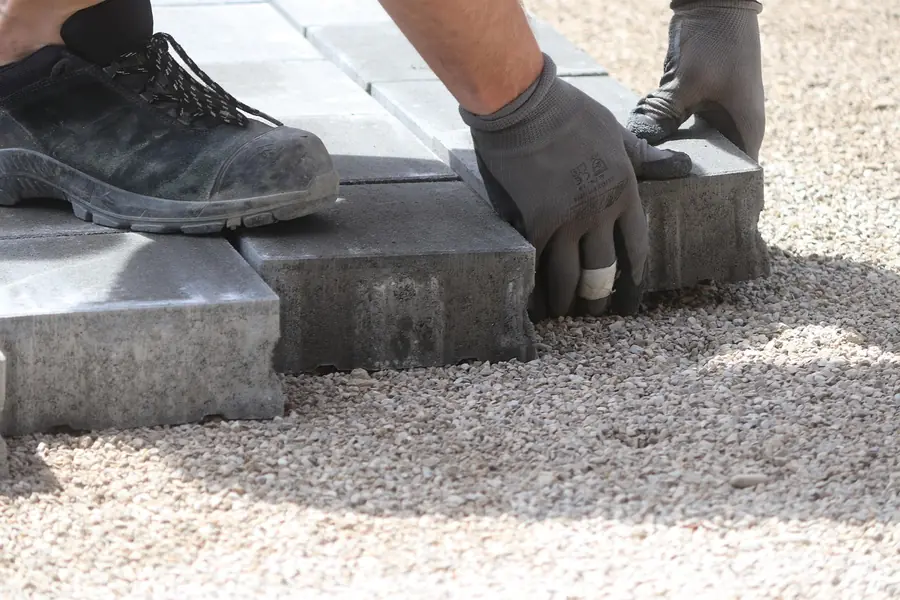
Permeable blocks have wider joints filled with fine grit instead of sand, laid on a base of clean stone with no fines. Water goes through the surface and is held in the base while it soaks away. This adds the £10 to £20 per m² mentioned above, mostly because the base is deeper and the stone costs more. On London Clay it rarely soaks away fast enough by itself. The government’s guidance on permeable surfacing of front gardens suggests a pipe in the sub-base on very clayey soils to carry surplus water to the drains. On the northern side of Hornchurch we usually include one, and it shows on the quote as its own line.
Both work. On gravel near Elm Park, permeable block works well. On clay towards Cranham, standard block with a well-placed channel is often the cheaper and more reliable choice.
The block itself: concrete, clay and what the extra money buys
Once the ground is dealt with, the block is the main thing you choose, and it changes the price more than people expect.
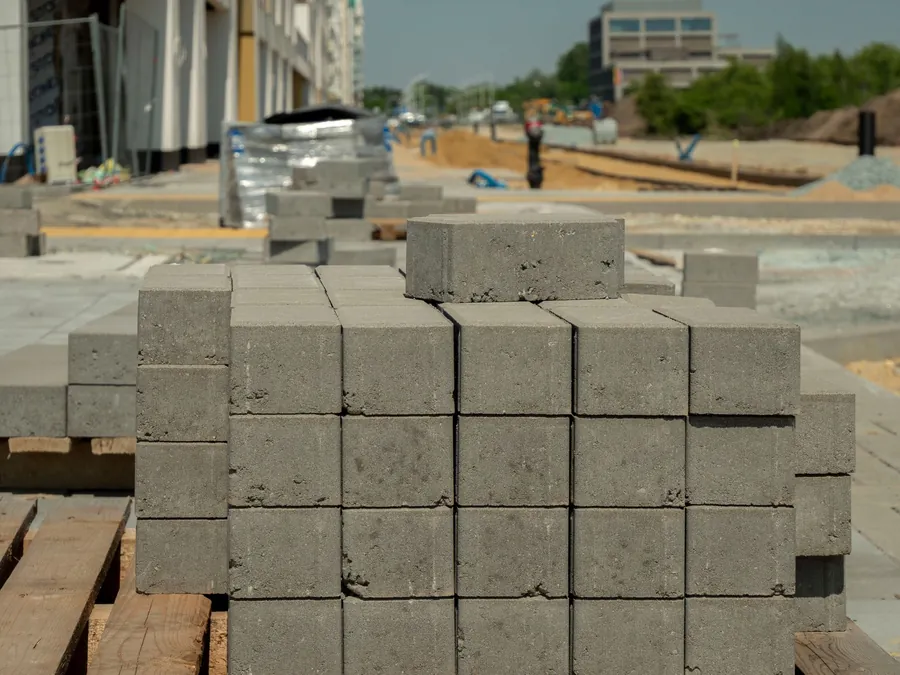
Concrete block is made in moulds. It comes in dozens of colours, and the 60mm thickness we use on drives is strong enough for any family car or a delivery van reversing in. Cheaper ranges are coloured mainly at the surface and fade over ten years or so. Better ranges carry the colour further through the block, which accounts for much of the gap between £75 and £90 a metre.
Clay pavers are fired like bricks. They keep their colour for life, they look right next to the older brick around Hornchurch village and Upminster’s Garden Suburb, and they cost more to buy and more to cut. The extra cost is easiest to justify on an Edwardian house in Emerson Park. On a rendered 1930s semi, a good concrete block in a muted brindle often looks just as right for less money.
Do not judge a block from a small square on a brochure. Ask the installer to bring a full-size sample, or a few loose blocks, and put them on the ground in front of your house in daylight.
Edging, patterns and the awkward bits that add up
Two quotes for the same block on the same front can still differ because of the extras. Here is where they usually come from.
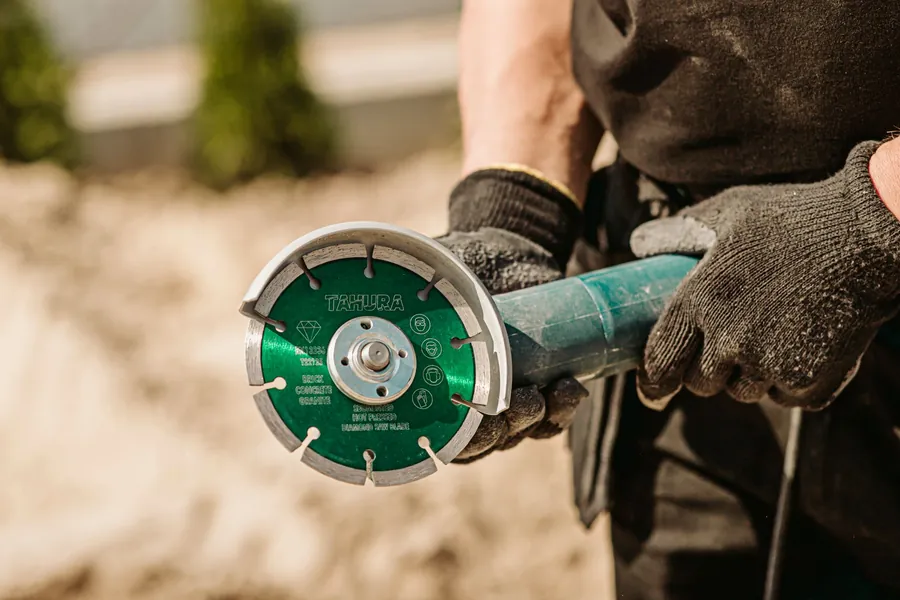
- Pattern. Stretcher bond and 90-degree herringbone need fewer cuts. A 45-degree herringbone, which we recommend where cars turn on the drive, needs a cut block at nearly every edge. That means more time on the disc cutter and roughly 5 to 10 percent more blocks wasted.
- Borders. A single soldier course in a contrasting block is standard and included in our band. A double border, or a contrast band through the middle, adds material and setting-out time.
- Curves. A curved edge to a lawn or bed looks softer than a straight one, but every block along it has to be cut individually.
- Inspection covers. Most semis have at least one cover in the front garden. A recessed tray lets the blocks run straight across it, but each tray is an extra item on the quote.
- Steps and level changes. Fronts on the slopes up towards Upminster Hill or along the Ingrebourne valley sometimes need a step or a low retaining edge. Both cost far more per metre than flat paving.
Each of these should be its own line on the quote. Then you can drop the double border and keep the recessed cover, rather than haggling over one lump sum.
The Havering dropped kerb: a separate bill
If your house has no dropped kerb yet, the block paving price does not include one. In Havering the pavement crossing is a council job. The Havering Council dropped kerb application page sets a non-refundable £261 application fee. After that, an officer inspects the site and quotes for the construction, which only the council or its approved contractors can do.
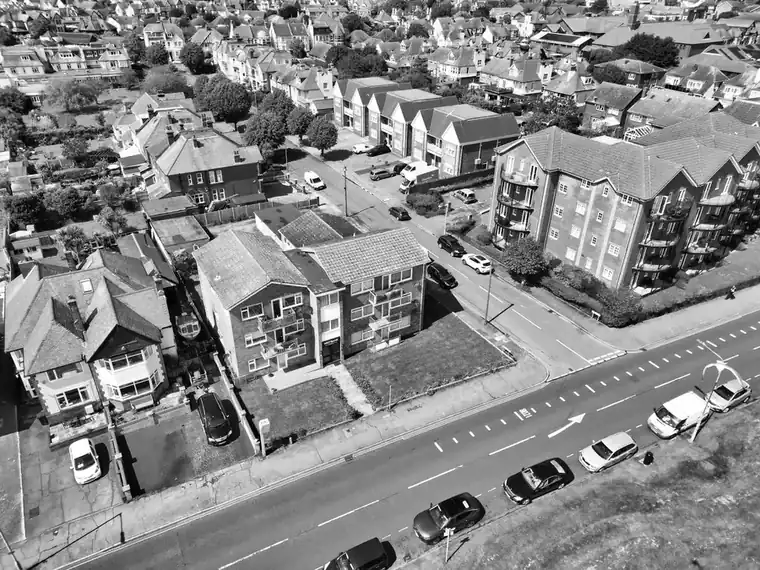
Two things affect block paving here. If you are widening an existing drive for two cars side by side, the kerb may also need widening, which means a new application. The levels also have to meet. The edge of your new drive has to match the back of the council’s crossover, so we set our edge course to the height the kerb will finish at, not to the old garden. Our post on getting a dropped kerb in Havering explains how to time the application around the driveway work so the council’s quote does not run out.
How block paving compares with resin and tarmac on price
Block paving sits between tarmac and resin on the day it is laid, and usually does best when you work out the cost per year.
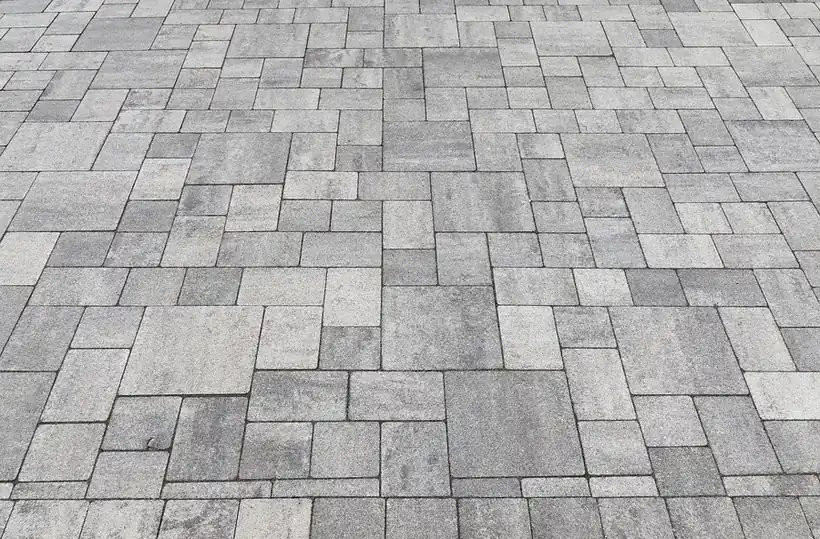
Per square metre, tarmac costs us £55 to £80, block paving £75 to £115 and resin bound £80 to £120. On a semi front that puts tarmac around £1,000 to £1,500 below block, and resin at roughly the same price or a little more. Over the drive’s life the order changes. A well-based block drive lasts 25 to 40 years, and a sunken patch can be lifted and relaid with the same blocks. Tarmac usually lasts 15 to 20 years and resin 15 to 25, and a repair on either shows. Spread a mid-range block drive on a semi over its life and you get something like £110 to £170 a year. Do the same sum for tarmac or resin and both usually come out higher.
That doesn’t make block right for every house. Some people just hate weeding joints, and fair enough. If you are weighing the three on looks and upkeep rather than price, our guide to how long a driveway lasts in Havering covers how each one wears on local clay and gravel.
If you would like a fixed price for block paving on your own front, we will come out, measure up, check what is underneath and list every line in writing. Book a free block paving quote in Hornchurch or Upminster.