The cheapest tarmac driveway cost in Hornchurch is the one you pay for twice. That happens a lot round here. A van turns up, the drive is black by teatime, and within two winters it has split along every crack in the concrete underneath. Proper tarmac isn’t expensive by driveway standards. We charge £55 to £80 per square metre, below both block paving and resin. But nearly all of that money goes into layers you never see once the job is done. Below we break the price down layer by layer, put totals on the fronts we measure most often in Havering, and explain why the clay north of the railway moves a quote more than anything else.
Tarmac driveway cost in Hornchurch: what £55 to £80 a square metre covers
That rate is for the whole drive. On every job it includes breaking out the old surface and taking it away, digging down to firm ground, a compacted stone base, an edge set in concrete, a drainage channel, and two separate courses of hot tarmac. Leave any of those out and the price drops, but so does the life of the drive.
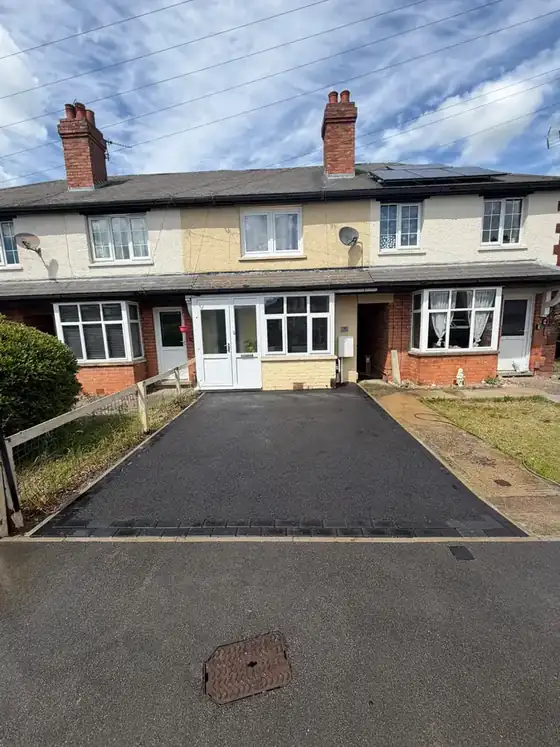
Jobs at the £55 end tend to share a few things: a level, rectangular front, ground that drains, and a nearby gully the channel can join. Jobs nearer £80 are usually on heavy clay, with a soakaway to build from scratch, a curved boundary that means a lot of edging, or a double border in block. Our tarmac driveways page sets out the full build. Every quote we hand over lists each layer with its depth, so you can see which end of the band you’re at and why.
Prices for three typical Havering fronts
Area drives the total more than anything else, and Havering’s housing comes in a few recognisable sizes.
The interwar semi
Much of Hornchurch, Elm Park and Upminster went up between the wars, mostly as semis with a bay, a side passage and a small front garden behind a low wall. Take that garden up for two cars and you usually have about 45 square metres. In tarmac that is roughly £2,500 to £3,600. A front that keeps a planted strip down one side comes in a little under that.
The Cranham or Harold Wood bungalow
Bungalow plots are often shorter and squarer, with room for one car and a path. At around 30 square metres the band works out at £1,650 to £2,400. On a front this small, the fixed costs of the job (the lorry, the roller and the crew for the laying day) make up a bigger share of the bill. Small drives therefore tend to price towards the top of the band.
The Emerson Park drive
Emerson Park began as an estate of large detached houses on generous plots in the 1890s, and plenty of fronts there still run to 100 square metres or more with a turning area. At our rates, 100 square metres comes to £5,500 to £8,000. Tarmac saves you the most at this size. In resin the same drive costs at least £8,000.
Two hot courses or one cold skin
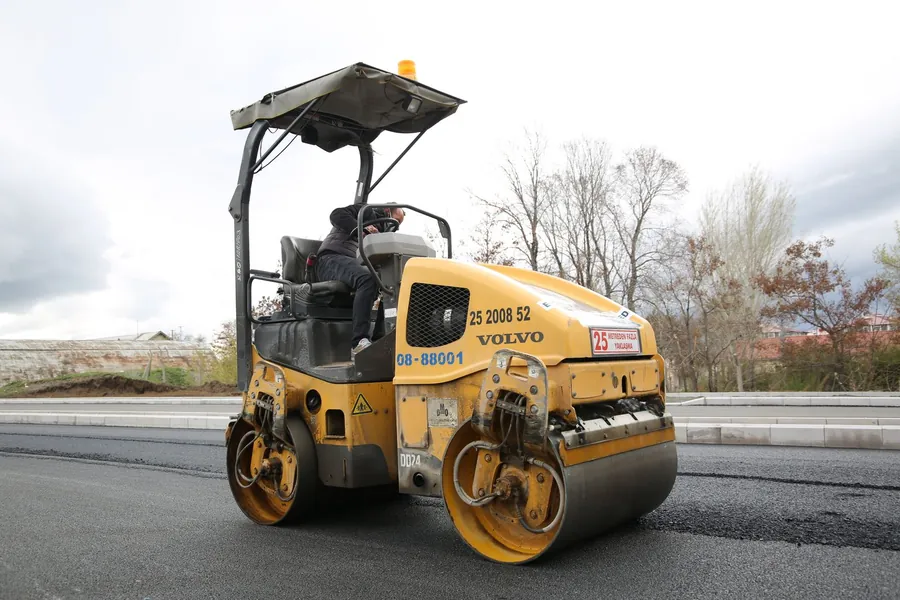
The big gap between quotes comes down to what actually gets laid. A proper drive has two courses. First comes a binder course of about 50mm, the coarse, structural layer that spreads the weight of the car into the base. On top goes a wearing course of 25 to 30mm, the finer mix you actually drive on. Both arrive hot, both are rolled while still workable, and we lay both on the same day.
The doorstep version is a single course of about 25mm, often cold, rolled straight over old concrete or crazy paving. On the day it looks exactly like ours. The difference is what’s underneath. Without a binder course the surface has nothing to hold it together, and every joint or crack in the old slab works its way up through the new top. Our post on choosing a driveway company covers how to deal with cold callers, including your right to cancel work agreed at home.
If two tarmac quotes for the same drive are £1,500 apart, ask both firms to put the course depths in writing. The answer is usually sitting right there.
Dig depth and sub-base on London clay
Havering’s ground changes as you head north. Round Elm Park and the southern side of Upminster the subsoil is mostly river terrace gravel, and it drains freely. Further up, through Emerson Park, Cranham and Harold Wood, you are more often on London Clay. It swells when it’s wet and shrinks when it dries out, so it never quite stays still.
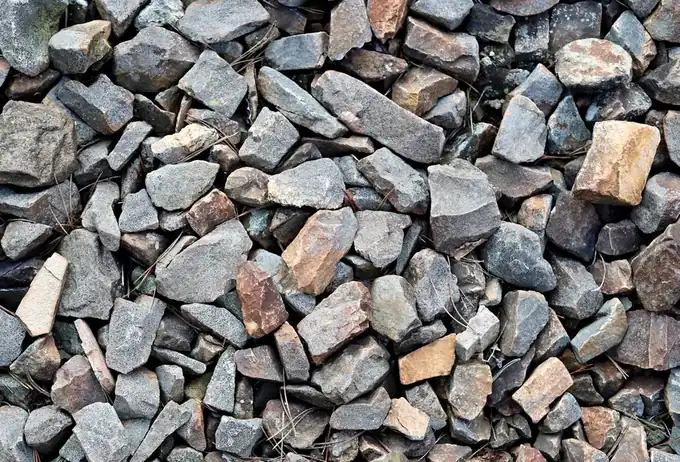
Tarmac is flexible. It bends with whatever is underneath it, so the base has to be the thing that stays put. On gravel ground we dig to about 150mm. On clay we go nearer 200mm, put down a geotextile membrane so the stone doesn’t sink into the clay, then compact MOT Type 1 in layers with a roller. Each extra 50mm across a 45 square metre front is more spoil in the skip, more stone delivered and another pass of compaction. That’s the main reason a clay-side drive in Emerson Park usually lands in the upper half of our band.
The trial hole on our site visit tells us which ground you have. We’d rather find out then than when the digger is already there.
Edging and kerbs: what stops tarmac spreading
Hot tarmac pushes outwards when the roller goes over it, and it keeps creeping slowly for years afterwards if nothing holds it in. An untrimmed tarmac edge against a lawn will crumble within a few seasons. So every quote we write includes a fixed edge, whatever the budget.
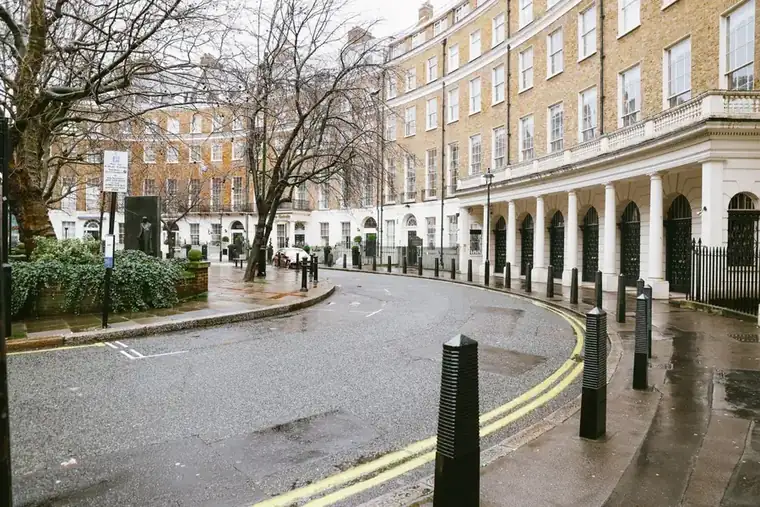
The cheapest option is a plain concrete path kerb, bedded and haunched in concrete. A soldier course of block paving costs a little more per metre and suits the red brick of interwar Hornchurch much better than black tarmac running straight to the fence. A block apron at the gateway, where the tyres turn, costs more again but takes the heaviest wear. Edging is priced per linear metre rather than per square metre, so a curved Emerson Park sweep has far more of it per square metre of drive than a straight terrace front.
Drainage, the 5m² rule and the dropped kerb
Tarmac doesn’t let water through, and that has a direct effect on the price. Since October 2008, covering more than five square metres of a front garden with an impermeable surface needs planning permission unless the rainwater drains to a permeable area on your own land. The government guidance on paving front gardens sets out the options.
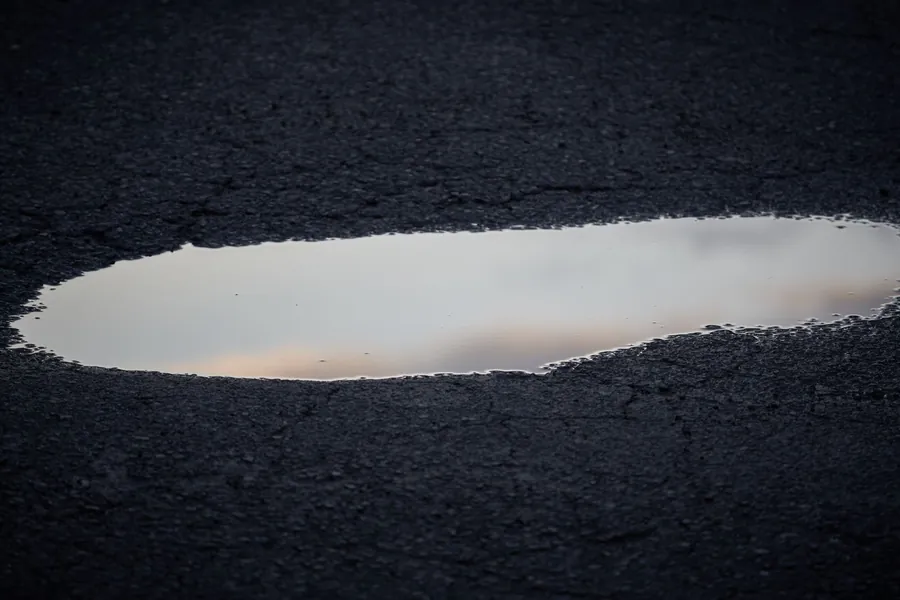
We lay tarmac to a fall towards a linear channel at the gateway, and the channel runs to a soakaway or a border so the drive stays within the rules without an application. On free-draining gravel a soakaway is a modest job. On clay it may not work at all, and we have to find another route for the water, often to a planted bed. That is the one groundwork item that can add most to a tarmac quote, and we sort it out at the site visit rather than on the day.
The kerb outside is a separate bill. Havering Council’s dropped kerb service charges a non-refundable £261 to process an application. After inspecting the site, the council quotes for the work, and only the council or its approved contractors may build it. Some roads also need planning permission first, and the council publishes a list of Havering roads that need planning permission for a dropped kerb. Check it before you book any drive. If you apply early, our gateway can be shaped to meet the new kerb.
How long tarmac lasts, and how its cost compares with resin and block
Two hot courses on a proper base should give you 15 to 20 years. When it does start to go, it’s usually the top that wears: the surface goes grey and loose stone starts to appear. If the base underneath is still firm, a new wearing course can go straight over it without digging the whole drive out again. Block paving and resin don’t give you that option.
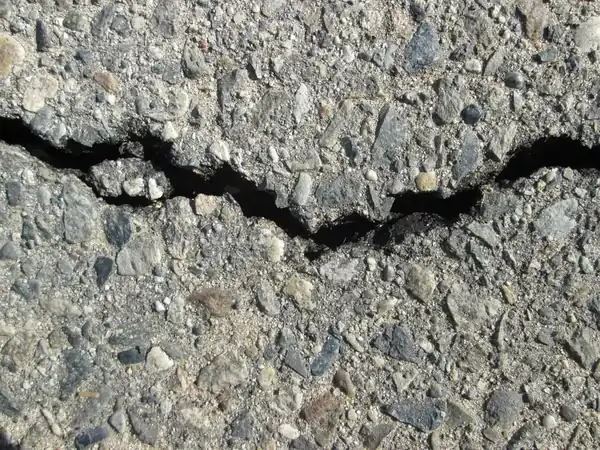
A crack like the one above is a different problem. When the surface splits right through, the base has usually failed, and laying a new top over a failed base only buys a year or two. On clay, that failure tends to start where the dig was too shallow.
On a 45 square metre semi front, the three surfaces line up like this at our rates:
- Tarmac: about £2,500 to £3,600
- Block paving: £3,400 to £5,200
- Resin bound: £3,600 to £5,400
Block paving lasts longer and you can lift and relay a section if it sinks. Resin drains through itself and looks smarter against a 1930s front. Tarmac wins on price and on speed, as the surface goes down in one day. For the detail on the other two, see our block paving cost breakdown and our more recent guide to resin driveway prices, which use the same three fronts.
If tarmac fits your budget, spend the money on the edge and the drainage rather than shaving them off. A plainer drive built on a deep base will still be sound long after a cheaper one has started to crack. Get a free tarmac driveway quote in Hornchurch or Upminster and we’ll dig a trial hole, measure up and put every layer depth on the price.