If an electric car is anywhere in your plans, even if the current one still runs on petrol, it should change how a new drive in Hornchurch or Upminster gets built. That’s because the expensive part of home charging isn’t the charger. It’s getting a cable from the house to wherever the car’s charging port ends up, under whatever surface you’ve just paid for. Do it while the front garden is dug out and the cable costs a trench that’s already open. Do it a year later and someone is cutting into a finished drive. This guide treats driveways for electric cars as one job with two trades in it. It covers where the charger should go, what goes under the base, how the surface copes with a heavier car, the dropped kerb, Havering’s position on cables over the pavement, and which 2026 grants are still available.
Driveways for electric cars start with the charger, not the surface
On a normal quote visit the first question is block, resin or tarmac. When an electric car is on the way, we’d rather settle two other things first: where the charger will be, and where the car will sit while it charges. Both affect the dig.
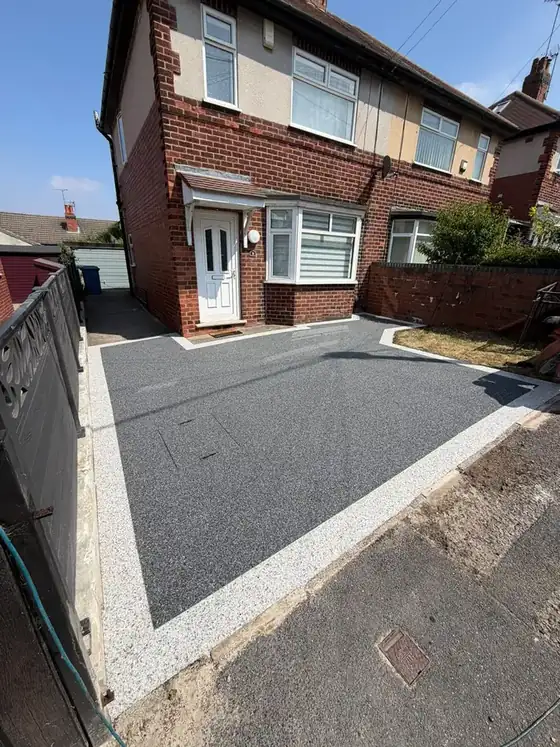
The drive above is one of ours, on a fairly typical semi. The parking runs along the flank of the house with the side gate at the far end. On a layout like that the charger nearly always ends up on the front or side wall near the bay, and the cable has to reach a car that might be nose-in or reversed. If that’s fixed before the excavator turns up, the trench for the cable is just part of the dig. If the surface comes first, retrofitting means lifting it. With block paving driveways the blocks come up and go back. With resin or tarmac the cut leaves a patch that never quite matches.
Where the charger goes on a Hornchurch or Upminster house
Most chargers in this area go on the house wall, and the obvious spot isn’t always the right one. On many interwar semis around Hornchurch and Upminster the meter and fuse board are in the front hall or under the stairs. That keeps the cable run short, but the outside wall in front of it is often right beside the bay or the front door.
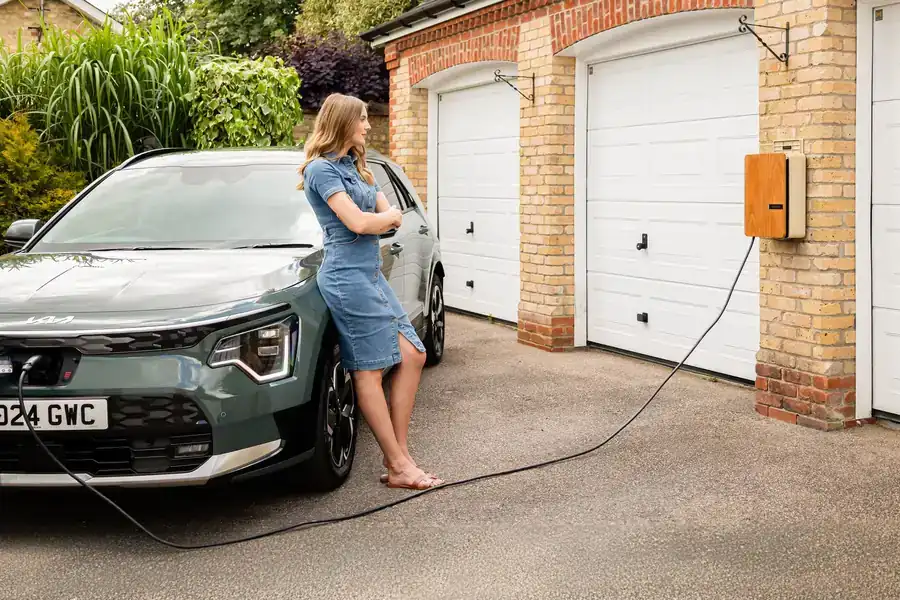
Start with the car itself. Charging ports can be on the front wing, the rear wing or the nose, depending on the model, and a tethered cable is usually 5 to 7.5 metres long. Put the charger where it reaches the port with the car parked the way you actually park, not the way the showroom photo shows it.
Then think about the walk to the front door. A cable lying across the only path to the door gets trodden on every evening, and on a narrow semi front a charger at the side of the house usually keeps it out of the way. If a second car is likely, put the charger between the two bays rather than at the far end.
Planning rarely gets in the way. One charger on your own off-street parking is normally permitted development, within limits on size and height. Those rules were rewritten on 21 October 2026, though, and the new version leaves out conservation areas and the grounds of listed buildings. The older rules can still be used until 20 October 2027. Havering’s conservation areas include Gidea Park, Langtons and St Andrew’s in Hornchurch, RAF Hornchurch, and Corbets Tey and Cranham near Upminster. If your house is in one, ask the council before the drill comes out.
Cable and duct: lay it before the drive goes down
When we dig out a front garden, the old surface and sub-base come out to depth across the whole area. For a few days there’s an open site between the house wall and the pavement, and that’s the cheapest moment there will ever be to put a cable in the ground.

There are two ways to do it. If the charger will be on the wall next to the meter, the cable may never need to cross the drive at all. If it’s going on a post at the far side, or on a garage, the electrician runs armoured cable in the trench to that point, with warning tape above it, before the sub-base goes back in. The cable size depends on the length of run and the charger, and the electrician sets the depth. Our job is to make sure the trench is where it should be and that nothing heavy is compacted onto the cable.
The second option suits people who haven’t bought the car yet. We lay an empty plastic duct with a draw cord in it from the house wall to wherever a charger might go, cap both ends and note the route. When the time comes, the electrician pulls the cable through without lifting anything. A duct costs very little compared with taking up a drive later, so we’d suggest it even if the charger is years away.
Ask the electrician about earthing at this stage too. Many newer chargers have built-in protection against a fault on the incoming supply. Some setups still need an earth rod driven into the ground near the charger, and that’s far easier before the surface goes on.
Surfaces, charger posts and heavier electric cars
Battery cars are heavier than you’d expect. Many weigh a few hundred kilos more than the petrol version of the same model, and that weight sits on four small patches of tyre. On a drive with a properly built base it isn’t a problem. On a thin one it shows up sooner.
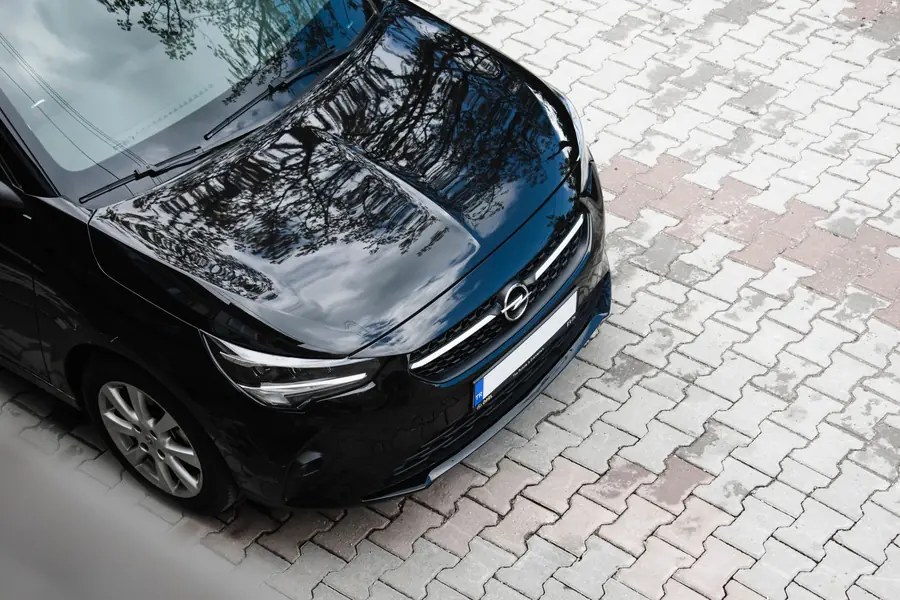
With block paving, 50mm blocks are the usual domestic size, and 60mm and 80mm blocks are made for heavier traffic. If a big electric SUV will be turning on the spot by the house, ask about the thicker block for that area.
Resin bound copes with car weight as long as the base under it is right. Its weak point, like new tarmac’s, is the steering wheel being turned while the car stands still, which scuffs a fresh surface. Leave the full curing time before the heavy car goes on. Fresh tarmac can also mark under a heavy, parked wheel on a hot day in its first summer.
Gravel is the awkward one. A charging cable dropped on loose stones picks up grit, and the plug end tends to land on the ground. A stabilising grid stops the rutting, but if you want gravel, put a solid strip or apron next to the charger.
If you want a freestanding post instead of a wall unit, the post needs a concrete footing with a duct coming up through it. That footing should go in during the groundwork, so the surface can be laid neatly around it. A post set into a finished drive means a core cut through the surface and a ring of repair around the base.
The dropped kerb comes before the charger
A charger on the house is no use if you can’t legally drive onto the drive. In Havering a car crossing the footway needs a proper vehicle crossing built by the council or its approved contractor. Driving over a full-height kerb damages it and the paving behind it, and the council can step in.
The kerb takes longer than anything else here. Havering’s fee is £261. The front needs to give a parking space of at least 2.4 by 4.8 metres, and the council’s policy allows up to 16 weeks for installation. So if you’re planning an electric car driveway from scratch, the kerb application goes in first and the drive is timed to meet it. Our guide to dropped kerbs in Havering covers the measurements, the street checks and the timing in detail, so we won’t repeat it here. Just don’t book the charger fitting for the week the car arrives if the kerb is still on the council’s list.
No driveway? Cables across the pavement and where Havering stands
Some people reading this won’t have room for a drive at all. A fair number of older terraces in the area have fronts too shallow for the 4.8 metres Havering asks for. The tempting fix is a cable out of the front window and across the pavement to the car. Don’t.
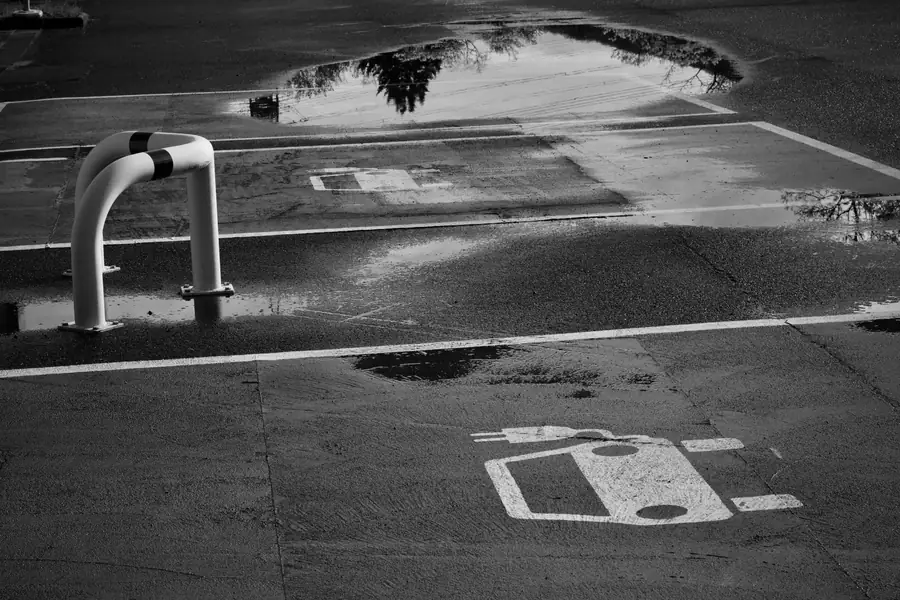
The Department for Transport’s guidance on cross-pavement charging says a cable trailing over the footway may breach Part IX of the Highways Act 1980. A permanent channel set into the pavement is the approved alternative, but it needs the highway authority’s consent under section 178 of the same Act. A new permitted development right for these channels began on 21 October 2026, though not in conservation areas, and the council still has to agree to anything that goes in its pavement.
As far as we could find in November 2026, Havering hasn’t published a scheme for residents to install pavement channels. Its approach so far has been public chargepoints. In August 2025 the council announced 109 chargepoints for car parks and residential streets, part-funded by the Office for Zero Emission Vehicles and run by Connected Kerb for 15 years. If you have no drive, ask the highways team what’s planned for your street before spending money on cross-pavement kit.
EV charger grants in 2026: who still qualifies
Short answer for most of our customers: if you own a house in Hornchurch or Upminster and you’re building your own drive, there is no government grant for the charger in 2026. What’s left is aimed at other people.

The GOV.UK guidance on electric vehicle chargepoint grants lists three home schemes. Flat owners, and renters of any kind of home, can get up to £500 towards one socket if they have private off-street parking. Residential landlords can claim the same rate per socket across their properties. And households with only on-street parking can get up to £500 if they install a cross-pavement solution such as a charging gully, which, as above, needs Havering’s agreement first.
The rate went up from £350 to £500 on 1 April 2026, and funding runs to 31 March 2027. Watch the timing, because the charger must not be installed until you’ve been told you’re eligible. If you rent a house locally and your landlord has agreed to a new drive with a charger, apply before the electrician books the fitting.
Order of work for an electric car driveway: electrician, installer, electrician
The two trades need to take turns, and the job goes wrong when one finishes before the other has started. This is the order that works on most fronts we quote for:

- We survey: measure the front, dig a trial hole and mark where the car will park and where the charger could go.
- The electrician visits before any digging and confirms the charger position, cable size and route, earthing, and whether the supply needs work. Installers have to notify the network operator, which is UK Power Networks in this part of London. A shared or looped supply to an older house may need sorting out first, and that takes time.
- If you need a dropped kerb, the application goes in now, so the 16-week wait runs alongside everything else.
- We dig out, and the cable or an empty duct goes into the open trench. Any post footing is cast. Take a photo with a tape measure in shot, so you know where the cable is in ten years’ time.
- The sub-base is compacted over the cable route with care, then the surface goes down.
- The electrician comes back to mount the charger, connect it and test it. A new circuit is notifiable building work, so you should get a certificate from a registered electrician.
If you’re planning a new drive and an electric car is anywhere on the horizon, tell us on the first visit. We’ll mark the cable route on the drawing and leave the trench open for your electrician. Book a free driveway quote and we’ll plan the charger route into the job from the start.